
Across the 2025/26 season, the average campervan listed with Quirky Campers NZ returned c.$16,000 to its owner after our fee, and the top performers reached nearly $28,000. This guide gives an honest look at those numbers: what you as an owner can earn hiring out your campervan, how many bookings and days of hire it took, the running costs to weigh against it, and what a sensible first year looks like.
By James O’Hern · General Manager, Quirky Campers NZ · Published June 2026
Time can be in short supply! If you’re in a rush, here’s the short version. Click any point below to jump straight to that section.
- What owners actually earned. Real figures from last season, from the quieter vans through to the top performers.
- What makes the difference. The four things that separate a van earning $10,000 from one earning $28,000.
- The costs to weigh against it. Certification, servicing and rego, with indicative numbers for each.
- How our pricing works. You keep 67%, we take 33%, and here’s everything that covers.
- A realistic first year. Why a new listing earns less to start with, and roughly how much less.
The honest picture on owner earnings
Understanding the financial side is a big part of deciding whether to hire out your campervan. Buying and converting a van to a high standard is not cheap, so it is fair to want a clear view of the return before you commit.
We have already written about what being a Quirky owner involves: the joy of it, what we look for, the work, and the compliance side. You can read that here: How to hire out your campervan with Quirky Campers NZ. This article looks at the numbers from last season and gives you a straight answer on what the returns can look like.
One thing up front. The figures below come from vans that were listed with us for a full season. We removed any that joined partway through the 2025/26 financial year (April 2025 to March 2026), because a half year of earnings would distort the averages one way or the other. So what you are seeing is what an established van earned across a full year, not a best case picked to flatter.
What Quirky owners earned last season
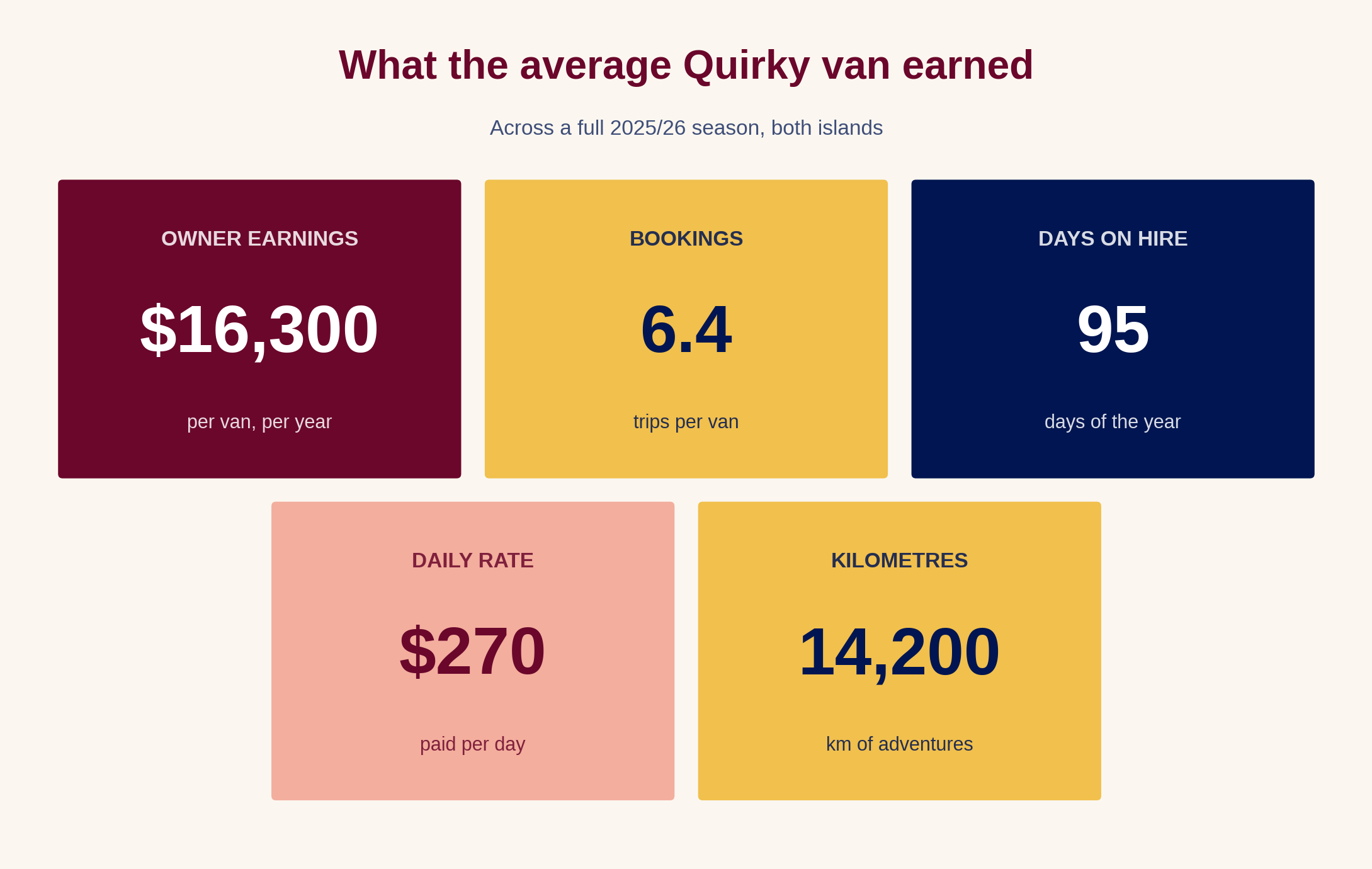
Last season, the average van on our platform returned approximately $16,300 to its owner. That is after Quirky’s fee, so it is money in the owner’s pocket before their own running costs (more on those shortly). A handful of our highest earners returned $26,000 to $28,000.
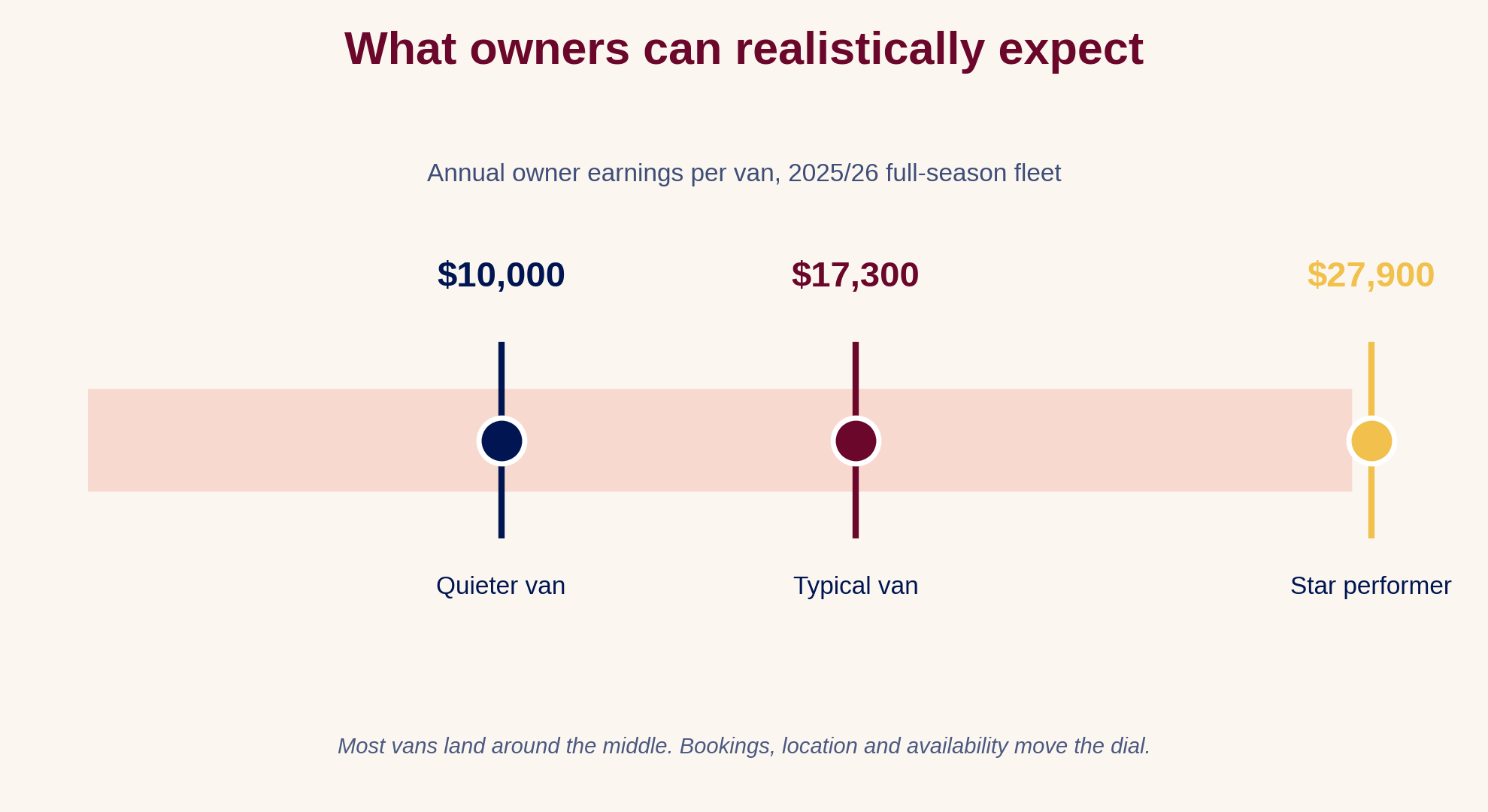
At the quieter end, a van might return around $10,000 across the year. That still typically covers the running costs of keeping a van safe and legal, with something left over: for the upgrades you have been meaning to do, a few trips of your own, or simply chipping away at the cost of the van itself.
| Owner earnings, 2025/26 (full-season vans) | Returned to owner (NZD) |
|---|---|
| Average | $16,300 |
| Median (the typical van) | $17,300 |
| Top performers | $26,000 to $28,000 |
| Quieter vans | $10,000 |
Figures are the owner’s share after Quirky’s fee, before the owner’s own running costs.
The other numbers: bookings, hire days and kilometres
Earnings are the headline, but a few other figures fill in the picture of a typical year on the platform.
| A typical van’s year | Figure |
|---|---|
| Bookings across the season | 5 to 10 (average just over 6) |
| Average booking length | 15 days |
| Days on hire | 90 to 100 days |
| Distance covered while on hire | 14,000 km (depending on pick-up location) |
A van out for 95 days a year still leaves much of the year for your own use. That is part of the benefit to owners, as the van earns its upkeep and is still yours for the weekends and holidays you want it for.
When the bookings happen
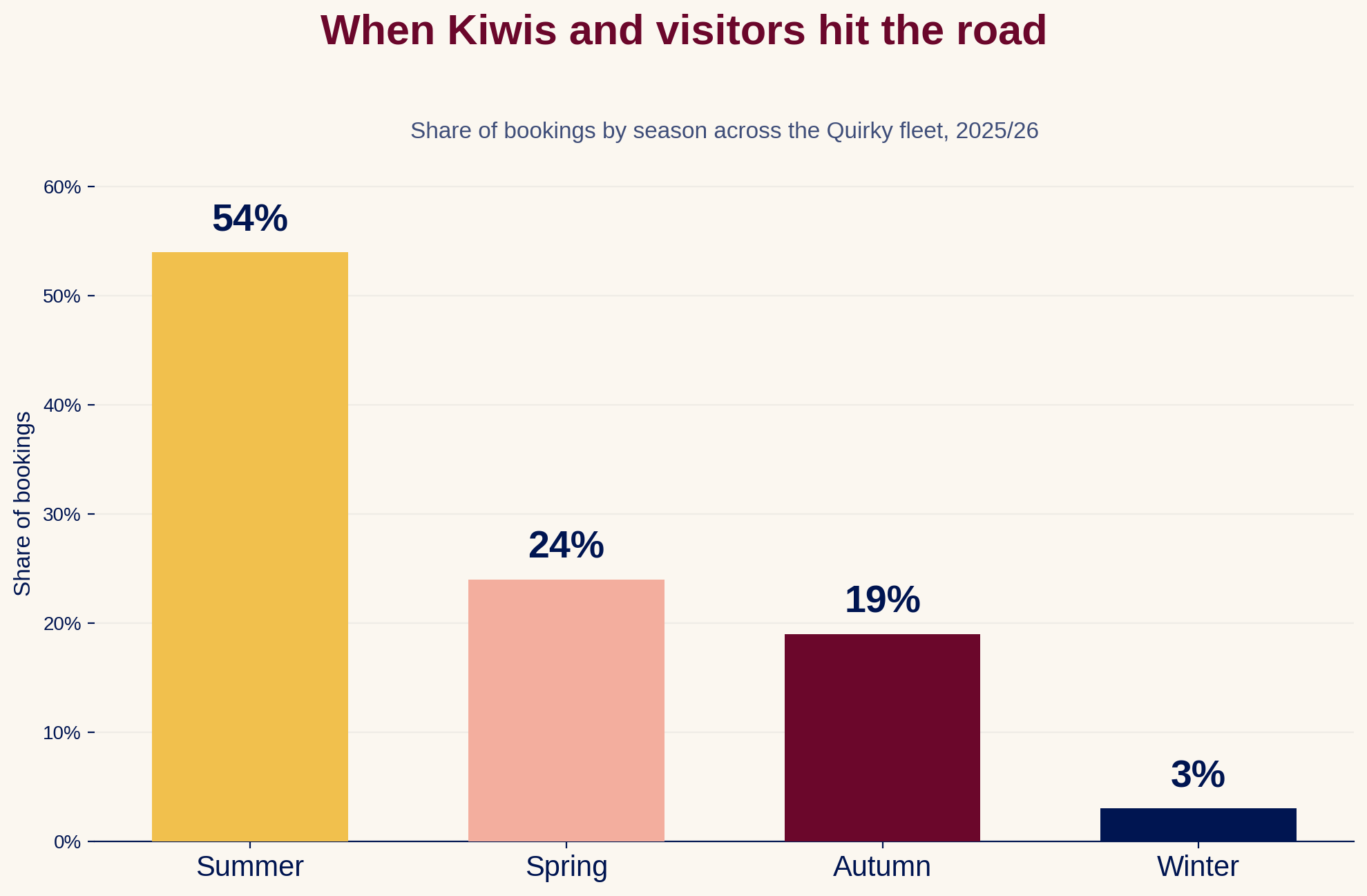
Demand is highly seasonal. More than half of last season’s bookings fell in summer, with spring and autumn making up the majority of the rest. Winter is generally quiet.
Your own use of the van between roughly October and March is the single biggest lever on your income. Every peak week you keep for yourself is a week the van is not earning. That is entirely your call, and plenty of owners happily trade some income for their own summer trips, but it is worth thinking about this before going too hard on calendar blocks. Vans that stay available through the busy months, and are set up for cooler-weather travel, tend to earn more steadily across the year.
What drives your income
No two vans earn the same, and a handful of things explain most of the difference.
- Quirkiness (character). The vans that do best have a clear, coherent style and personality. People will travel a long way for a van they have fallen for!
- Photos. Great photos are the single biggest factor in how well a van books. It is why we contribute up to $500 towards a professional photoshoot before you go live.
- Location. Auckland and Christchurch are the busiest pick-up and drop-off points, but you do not have to be in either. Being close to an airport, or able to bring the van to a convenient handover point (usually for a small fee), works well too.
- Features. Customers consistently look for beds over 1.8m long, a shower (even a simple solar one), an awning, or a form of heating for the cooler months. None of these features are essential, but each one widens your camper’s appeal.
The running costs to weigh against it
The return is one side, but keeping a van safe, legal and well-presented costs money too, and it is only fair to show that side as well. As a rough annual guide:
| Cost | Indicative amount | Notes |
|---|---|---|
| Certificate of Fitness (CoF) | Approximately $140 to $180, however it can be higher for larger CoF B vehicles | Required every 6 months |
| Self-containment certificate | $120 levy plus approximately $150 for the inspection | Valid 4 years (about $70 a year) |
| Servicing (e.g. AA Silver Service) | $279 members, $299 non-members | Annually (depending on distance travelled) |
| Electrical Warrant of Fitness | $200 | Only if required. Valid 4 years |
| Gas Safety Certificate | Varies | Only if required. One-off |
| Registration (rego) | $250 to $400 as a guide, it varies by vehicle and fuel type | Annual fee paid to the government for all vehicles. Rego is higher for CoF vehicles. |
On top of these sit the usual maintenance costs: tyres, repairs, cleaning, and the consumables you restock between trips. Insurance while the van is on hire is covered by us, which takes one of the bigger costs off your plate.
We are not going to put a net profit figure on this, because it varies too much from van to van. But as a guide, even a quieter van returning around $10,000 covers the running costs above, with room to spare.
How Quirky Campers NZ’s pricing model works
Our pricing for owners is meant to be simple and transparent. You only pay when you get a booking. There is no charge to sign up, list or insure your van, and no hidden costs. There are no tie-in periods, though we always look for long-lasting relationships with our owners so we can make the most of working together.
Pricing explained: Quirky takes 33% of the booking total, and the remaining 67% goes to you.
In return you get:
- The Quirky Campers brand working to bring you great customers
- Insurance for your van whilst on hire, with the option to extend our policy (through Vero) to your own private use, plus 24/7 roadside assistance while it is out
- A quality listing, written to tell the story of your van and your conversion
- Up to $500 towards a professional photographer, plus Quirky Campers decals and stickers
- A GPS unit and subscription (we cover the unit and the ongoing subscription; you just arrange fitting)
- Owner support from the Quirky team, and help if something happens on the road
- Guides and documentation to make bookings straightforward
Because we are selective about which vans we list and where, there is less competition between vans on the platform, which helps keep bookings flowing to each owner.
What a realistic first year looks like
It would be easy to show you the averages and leave it there, but that would not be the full picture. Figures in this post are from established vans with a full season behind them. A brand new listing usually earns less in its first year, while it builds up reviews and we learn how best to present it.
Factor in 15% to 30% lower earnings in the first year as a reference. Reviews do a lot of quiet work, and each strong review makes the next booking a little more likely.
The bigger picture: New Zealand’s travel market
Demand for your van does not happen in a vacuum, so it is worth a look at the wider market.
The encouraging part is that international tourism has recovered strongly. Overseas visitor arrivals reached 3.58 million in the year to February 2026, up 229,000 on the year before. Tourism New Zealand is targeting roughly 3.7 million arrivals by the middle of 2026. There is also a steady domestic market that has taken to campervan travel.
We will temper that with some honesty, though. Growth has been steady rather than a sudden surge, and the sector is not immune to the wider world. Covid showed how quickly things can change, and global events can still ripple through. Some of it is simply out of our hands.
Can I list more than one van?
One van is a sensible place to start. It lets you learn the ropes and see what the investment of time and money really looks like. If it goes well and there is demand in your area, you are welcome to list more, and plenty of our owners do. Each new van is considered case by case and needs to meet the same quality standard as the first.
Frequently asked questions
How and when will I get paid?
We process pay-outs twice a week, so you are normally paid within five days of a trip ending.
Do customers pay for Road User Charges (RUCs)?
Yes. For diesel vans we work out the RUCs for each hire after the trip, charge the customer, and pass it straight on to you with no mark-up.
Do I need to be GST registered or set up a company?
This is your decision to make. We can work with you whether you run your campervans through a company structure or privately yourself. We are not business advisors, so please check with professionals before making this decision.
Can I rent to friends and family?
Yes, you are welcome to rent to your friends and family through Quirky Campers NZ. Once your van is live, and once you know the dates of their travel, contact campervansnz@quirkycampers.com and the team can guide you through the process and answer any questions.
In summary
There is a lot to weigh up with campervan ownership. There are upfront costs to get a van ready, costs to keep it safe and compliant, and costs to keep it running. But get it right, and there is a real return to be had: an average of about $16,300 to owners last season, and more for vans that are well placed, well presented, and kept available through the busy months.
The owners who do best are the ones who put the effort in early and do not cut corners. They also tend to be the ones we work with year after year. If you are weighing it up and want an honest steer on what your van might do, get in touch at campervansnz@quirkycampers.com or via our website.
