


WHY START ON THE WEST COAST?
Glaciers, rainforest and six hundred kilometres of wild coastline.
The West Coast is the emptiest, wettest and (arguably) the most dramatic part of New Zealand.
State Highway 6 runs almost the full length of the 600km West Coast, hemmed in by the Southern Alps on one side and the Tasman Sea on the other. There is no quick way through, only the meandering road which takes in the sights along the way. Rainforest comes down to the road, the rivers run milky blue, and the mountains rise and fall beside you the whole way.
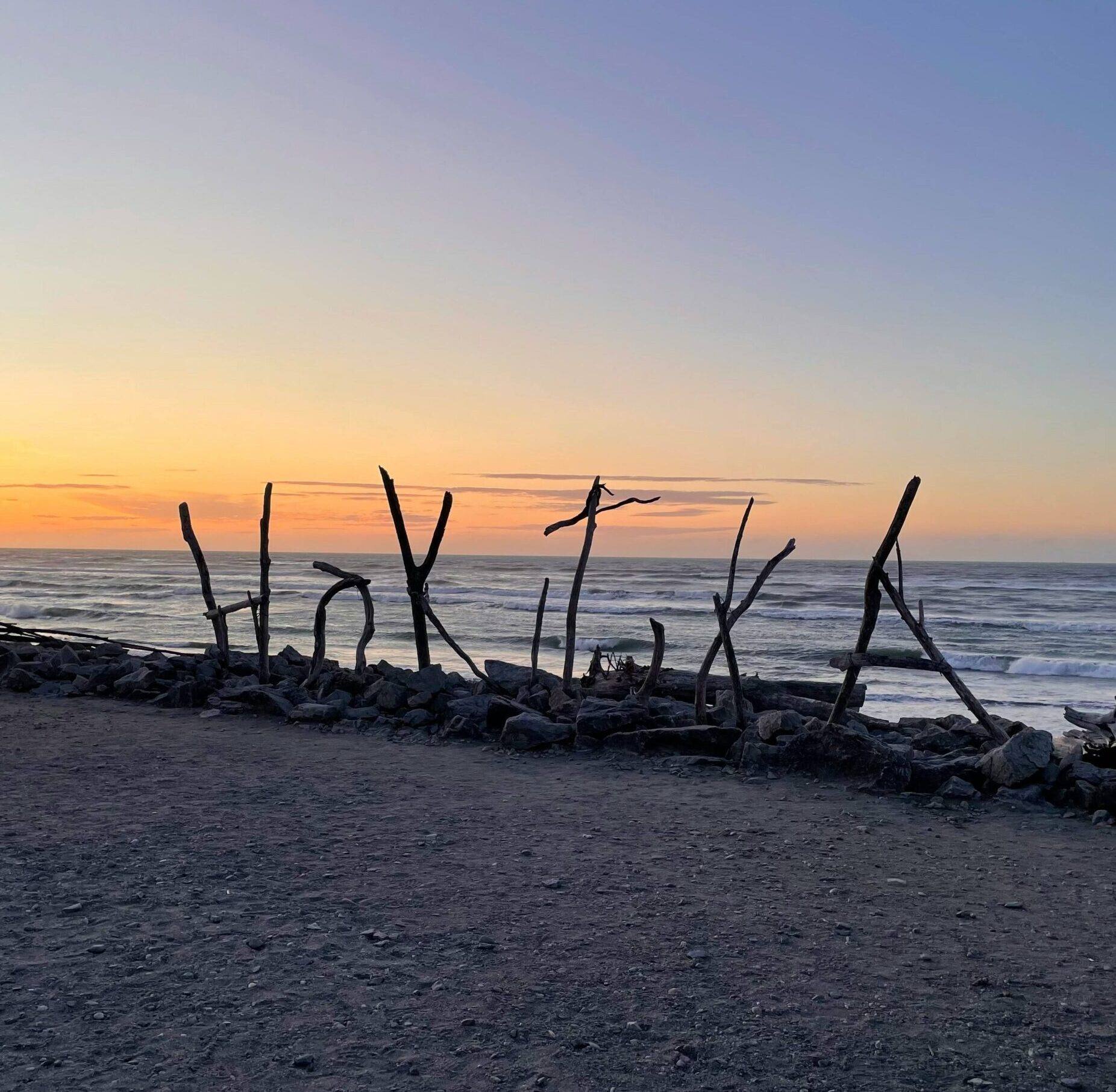
With only 35,000 inhabitants in the whole West Coast region, Hokitika is one of the larger towns. It’s famous for its sunsets, its driftwood beach and sign, and the pounamu (greenstone) carvers who work with stone pulled from the Arahura River. Head north for Greymouth, Punakaiki and Westport. Head south for Ōkārito, Franz Josef, Fox Glacier and eventually Haast.
The 139km West Coast Wilderness Trail runs from Greymouth to Ross straight through Hokitika, following old gold-rush tramlines, so a bike is well worth hiring.
DISTINCTIVE WEST COAST DAYS
48 hours on the West Coast: A simple plan
After your personal handover, stock up in Hokitika, then pick the West Coast experience that suits you.
01
The gorge and the lake
Half an hour inland, the Hokitika Gorge runs a turquoise that photographs look faked. It is glacial rock flour suspended in the water, and it is at its most absurd on a bright day after rain. The loop walk is 2km and takes about ninety minutes, crossing a 90m suspension bridge and a swing bridge replaced in 2025 after the ninety-year-old original was closed for repairs. Loop back past Lake Kaniere and Dorothy Falls, then finish on Hokitika beach for sunset.
02

Drive south to the ice
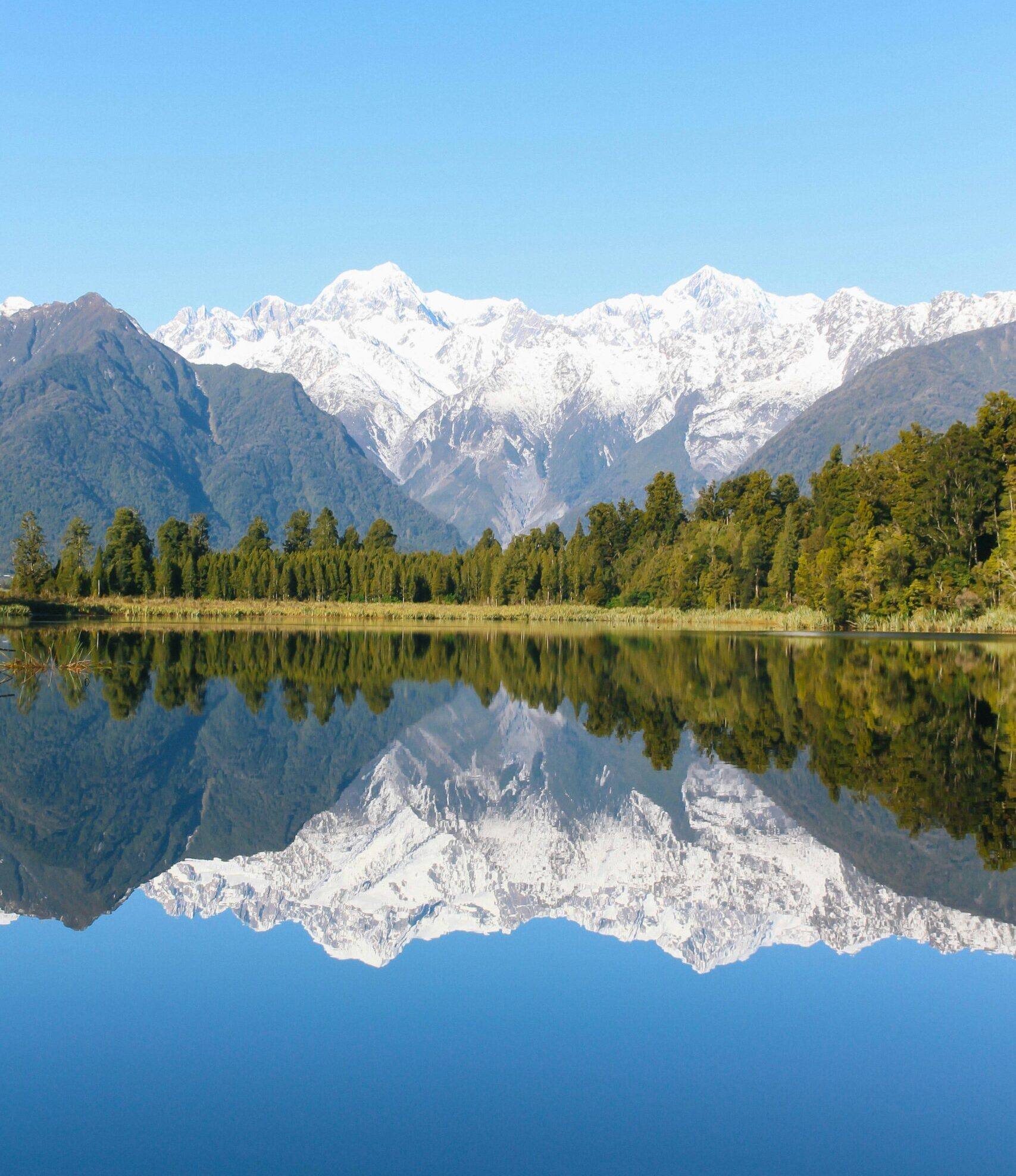
Franz Josef and Fox are twin rivers of ice that end just above sea level, a few hundred metres from temperate rainforest. There is nowhere else quite like it. The Franz Josef valley walk is a thirty minute return stroll to a viewpoint; the Fox South Side Walk takes about two hours return. Both glaciers have retreated a long way, so the ice looks smaller than the postcards, and a heli-hike is the only way to stand on it. Call in at Lake Matheson near Fox for the mirror reflections of Aoraki and Mt Tasman.
03
Head north up the Great Coast Road
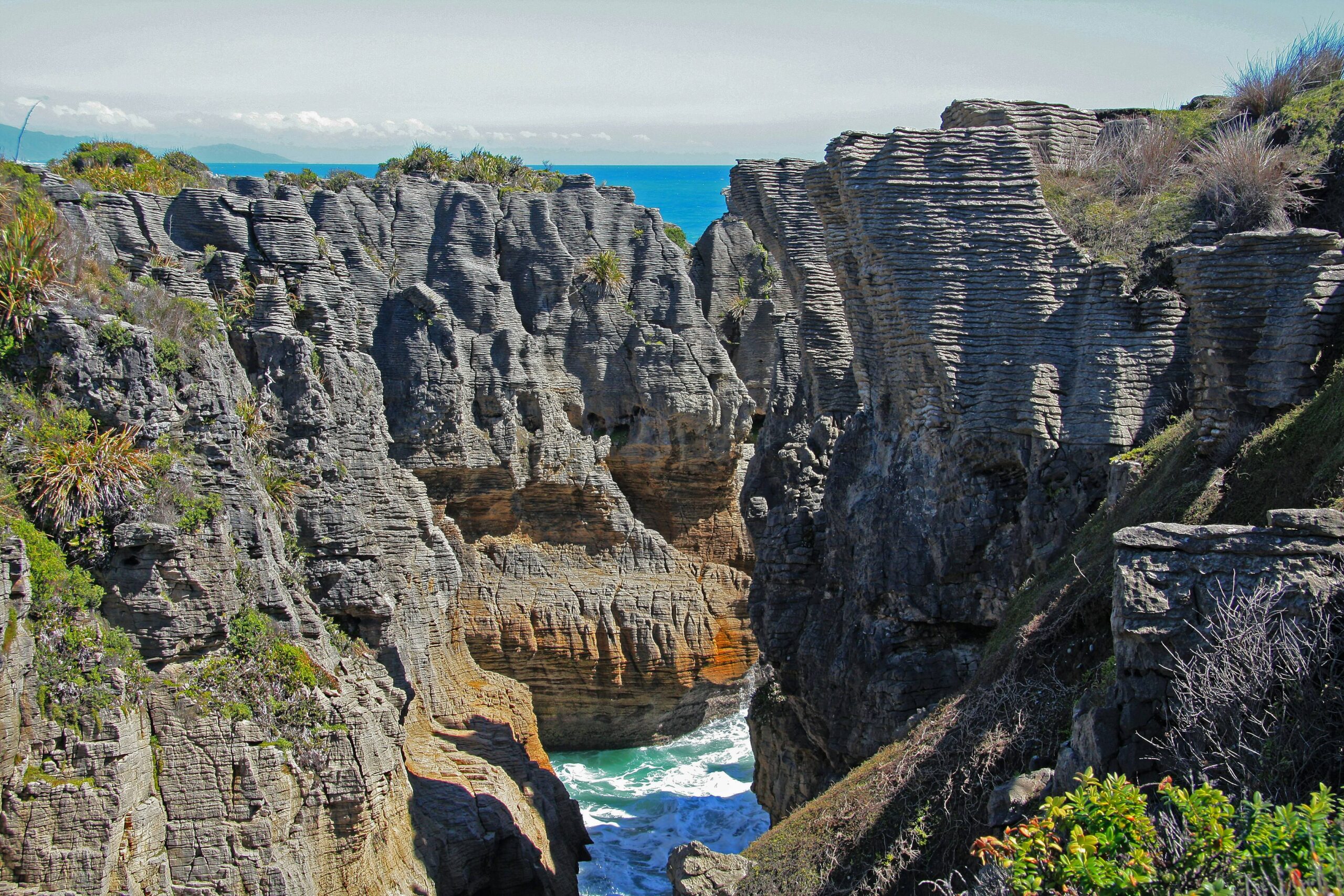
The stretch from Greymouth to Westport has been called one of the world’s great drives, and it earns it. At Punakaiki the Pancake Rocks sit in stacked limestone layers laid down 22 to 30 million years ago, then weathered into something that genuinely resembles a pile of pancakes. Time your visit for high tide with a big swell and the blowholes put on a show. Nīkau palms crowd the roadside, which is a strange thing to see at this latitude.

Start your trip on the West Coast
Quirky Campers connects you with privately owned, handcrafted campervans based near Hokitika. Every hire includes comprehensive insurance, 24/7 AA roadside assistance, unlimited kilometres and a personal handover from the van owner.
✓ Real vans, real character
No depot and no anonymous fleet vehicle. Choose a one-of-a-kind campervan designed and cared for by its owner.
✓ Arrive without a car
Fly into Hokitika from Christchurch in 45 minutes, ride the TranzAlpine train over Arthur’s Pass, or come up the coast by bus. Pick up your camper directly from the owner with all the handover details confirmed before travel.
✓ A quarter of the conservation estate
The West Coast holds parts of five national parks and about a quarter of New Zealand’s conservation land. It is the gateway to the Te Wāhipounamu World Heritage Area. Roam it all without kilometre limits.
Happy campers hiring on the West Coast
Independent Google reviews from people who have travelled with Quirky Campers NZ.


THINGS YOUR GUIDEBOOK MAY NEGLECT
A little West Coast background
The Coast has a longer and stranger history than its quiet roads suggest. Here are a few things worth knowing before you visit.
Mining roots
Gold was found in the Taramakau valley in 1864, and because the Hokitika River mouth was the closest anchorage to the diggings, a town appeared there almost overnight. The surveyor John Rochfort laid out the streets while prospectors and traders poured in through 1865. Within a year it was booming, and for a brief spell more than 4,000 people lived here.
The river port was always treacherous, and once the easy gold was gone the ships stopped coming. By the end of the century the population had halved to around 2,000. Walk down to Gibson Quay and you are standing on what was, for a few frantic years, one of the busiest waterfronts on the Coast.
Pounamu, greenstone
The South Island’s Māori name, Te Wai Pounamu, means the waters of greenstone. One of the main sources of pounamu is the boulders of the Arahura River, a few kilometres north of Hokitika, where there has been a Māori settlement for centuries.
Carving is a part of Hokitika’s identity and you can watch it being done in various shops locally. Learn about the meaning behind different shapes to better understand what you’re looking at and the stone’s cultural significance.
Rain, rainforest and one very bitten governor
The West Coast’s reputation for rain is well earned. Near the sea it gets 2,000 to 3,000mm a year, and in a narrow band high on the western flank of the Southern Alps it exceeds 10,000mm, making it amongst the wettest places on earth. All that water is what grows the rainforest and keeps the rivers that unlikely blue.
Bring repellent. The sandflies here are a local institution, and they bite skin left uncovered. In 1892 Lord Onslow, then Governor, was reportedly eaten alive on a West Coast outing while Richard Seddon, who had thought to apply repellent beforehand, emerged untouched.
TRAVEL DIFFERENTLY
Easy first nights around Hokitika
However you arrive, the Coast rewards a gentle first evening rather than a long first drive.
Hokitika itself has holiday parks within a few minutes of the beach. With more light, Lake Kaniere and Lake Mahinapua are both a short drive out and both have DOC campsites right by the water. Ross, twenty minutes south, is a quiet town at the southern end of the Wilderness Trail.
Prefer to freedom camp? You can in a Quirky certified self-contained campervan, but Westland’s rules are tighter than most and several townships are off-limits altogether. Have a read of the section below before you plan around it.
Getting to Hokitika, and home again
You do not need a car to get here. There are three good options across from Christchurch, and the same three work in reverse at the end of your trip.
By air
Air New Zealand flies Christchurch to Hokitika in about 45 minutes, with up to two services a day on weekdays. It is the quickest option and the hop over the Alps is worth a window seat on a clear day.
Coming from Auckland? There are no direct flights to Hokitika, so connect through Christchurch. The airport sits just south of Hokitika and is a few minutes from town. Ask your owner about airport pick-ups.
By train
The TranzAlpine is one of the world’s great rail journeys and it is a lovely way to reach the West Coast. It runs 223km from Christchurch to Greymouth in roughly four and a half hours, climbing through the Waimakariri gorges and over Arthur’s Pass before dropping through the 8.6km Otira tunnel, which was cut through the Alps and opened in 1923.
Greymouth is about forty minutes north of Hokitika, with bus and shuttle connections on. Check current operating days when you book, as the service has run reduced timetables outside the summer months. Or ask your host about a pick-up.
By road and bus
InterCity coaches run Christchurch to Greymouth in around four and a quarter hours over Arthur’s Pass, and down the coast from Nelson in about six hours. Services continue south through Hokitika and Ross towards Franz Josef and Fox Glacier.
Driving yourself from Christchurch, allow around three and a half hours over Arthur’s Pass on SH73. From Nelson it is a long and spectacular day down the coast.
Good to know before you go
One-way hire options
Because every Quirky van is privately owned, one-way hires need to cover the cost of getting the van home. We also need to check in with our owners to make sure they can accommodate collecting the vehicle.
Hokitika is within a comfortable day of Christchurch over Arthur’s Pass, and Queenstown is reachable south over the Haast Pass, so one-way options may be workable. Get in touch and we’ll quote your route before booking.
For longer trips, a loop that starts and finishes on the West Coast avoids a relocation fee, and heading out a different way than you came in makes for a better trip anyway.
Please talk to us first if you are interested in a one-way option.
Roads to plan around
SH6 runs the length of the West Coast and SH73 crosses Arthur’s Pass. They are narrow, winding and crossed by many one-lane bridges. Give way as signed, take it slowly, and allow more time than the distance suggests.
The Coast gets a lot of rain, and slips do close both the Haast Pass and Arthur’s Pass from time to time. Check NZTA journey planner before a big driving day. Our campervans are for sealed roads, so if a route you have set your heart on turns to gravel, check with us first. The last few kilometres of the Dorothy Falls road at Lake Kaniere are unsealed but short and well maintained, which is fine.
Freedom camping on the West Coast
All Quirky campers are certified for freedom camping. NZ’s freedom camping rules can be complex, and vary by region, change frequently, and rangers do enforce them.
Westland is one of the stricter districts. Under the district’s responsible freedom camping bylaw you must be in a certified self-contained vehicle on council land, and you may stay a maximum of two nights in any one location within a 30-day period.
Several townships are prohibited outright, including Fox Glacier, Ross, Harihari, Ōkārito and Jackson Bay. Others, Hokitika and Franz Josef among them, are restricted areas with their own conditions and vehicle limits. Check the schedules before you rely on a spot, and keep a holiday park or DOC campsite in reserve.
For more details, see Westland District Council’s camping rules. We also recommend the Rankers or CamperMate apps, which are great for planning ahead.
A few things about the Coast
The whole region sits on the Alpine Fault, where the Pacific and Australian plates grind past and into each other. That movement is what threw up the Southern Alps, and it has not stopped, which is why the mountains rise so abruptly out of the sea here.
Stop at the small places. Ōkārito Lagoon is the largest unmodified coastal wetland in New Zealand, with over 70 bird species, and the forest behind it holds the only wild population of rowi, the country’s rarest kiwi, at around 500 birds. Ross still has a working goldfield and a heritage trail. Punakaiki has nīkau palms and glow worms.
About 84% of the region is protected public land, so there is a great deal more here than the two glaciers everyone drives between. The regional tourism site has a good overview of West Coast scenic attractions if you want to learn more.
QUICK ANSWERS FOR WEST COAST HIRERS
West Coast campervan hire FAQs
Where do I collect my campervan on the West Coast?
At the campervan owner’s home, in or around Hokitika, a few minutes from the airport and about forty minutes south of Greymouth. The listing shows the approximate location before booking, and the exact address is confirmed before your trip. If Greymouth would be easier for you, let us know and we can discuss it with the owner.
How do I get to Hokitika without a car?
Three good options, with Air New Zealand flying from Christchurch to Hokitika in about 45 minutes, with up to two services a day on weekdays. The TranzAlpine train crosses from Christchurch to Greymouth in around four and a half hours, and Greymouth is forty minutes north of town. InterCity coaches run from Christchurch over Arthur’s Pass in about four and a quarter hours, and from Nelson down the coast in about six. From Auckland you would connect through Christchurch, as there are no direct flights. Tell us how you’re arriving and we’ll help line up the handover.
Can I drive from the West Coast to the rest of the South Island?
Yes, and the drives are some of the best in the country. Arthur’s Pass on SH73 takes you to Christchurch in around three and a half hours. South over the Haast Pass puts you on the road to Wānaka and Queenstown. North up the coast leads to Westport, Nelson and the top of the island. All of it is sealed, and all of it takes longer than the map suggests.
What is the weather like on the West Coast?
Mixed, to say the least. The coast gets 2,000 to 3,000mm of rain a year and the mountains far more, which is exactly why the rainforest is so dense and the rivers run that extraordinary blue. The towns still see 1,800 to 1,900 hours of sunshine a year. Pack a decent raincoat, insect repellent for the sandflies, and plan flexibly: a wet morning here often turns into a spectacular afternoon.
Can I walk up to the glaciers?
You can walk to a viewpoint but not onto the ice. At Franz Josef the valley walk is about thirty minutes return to a viewpoint roughly 3km from the terminal face. At Fox the South Side Walk is about two hours return, reaching a viewpoint around 2.6km from the face. Both glaciers have retreated significantly, and standing on the ice now means taking a guided heli-hike. Access does close at short notice after heavy rain, so check the daily glacier update before you drive down. (Access status correct as at October 2026.)
What is included with West Coast campervan hire?
Every booking includes comprehensive insurance, 24/7 AA roadside assistance and unlimited kilometres. Each camper also comes with all the cookware you need, plus bedding and towels at no additional cost.
Can I stay off grid in a campervan from Hokitika?
Yes, all Quirky Campers NZ vans are set up for off-grid travel, with solar panels, leisure batteries and inverters that keep your lights, fridge, water pump, phones and laptops running without needing a powered campsite. Bear in mind the West Coast is cloudier than most of the country, so solar charges more slowly here than it would in Marlborough. The exact off-grid duration depends on the specific van’s setup and the time of year, and is detailed on each individual van profile.
What happens if my flight, train or bus is delayed and I’m late for my pick-up?
Weather does disrupt travel on this coast, and flights into Hokitika are occasionally diverted or cancelled. If you’re running late, please contact your van owner directly as soon as possible. Quirky NZ owners are generally flexible and will do their best to accommodate a later collection, including evening pick-ups where reasonable. If a same-day handover isn’t possible, we’ll work with you and the owner to arrange collection the following morning. Get in touch if you’d like to discuss specific arrangements.

Plan with confidence
Useful reading before you collect your campervan on the West Coast.

Driving a campervan in New Zealand: what it’s really like
by James O’Hern
Driving a campervan in New Zealand is easier than most first-time visitors expect, and it’s one of the best ways to experience the country.

Is it safe to hire a campervan in New Zealand? How Quirky Campers NZ protects you on the road
by James O’Hern
Every campervan in the Quirky Campers NZ fleet meets the same safety and compliance standards as the largest commercial campervan operators in New Zealand.
Campervan insurance with Quirky Campers NZ: explained
by James O’Hern
Every Quirky Campers NZ booking includes fully comprehensive insurance with Vero and 24/7 AA roadside assistance as standard. We offer three protection plans (Ready
Choose your West Coast-based soul mate of a camper
Each West Coast campervan comes decked out with its own unique personality. So check availability, find your perfect match and book your ideal travel companion today!
