



Thinking about converting a van into a campervan? Before you fall in love with a shiny Sprinter, a cute little Transporter or a bargain Boxer on Auto Trader, there’s one unglamorous thing you really need to understand: weight.
Not the most romantic part of vanlife, we’ll admit. But campervan weight affects almost everything: what you can legally drive, how much you can pack, whether your conversion is safe, your MOT class, speed limits, insurance, fuel economy and whether you’ll be nervously unpacking your cast iron pan collection at a weighbridge.
In short: the right van is not just the one with the prettiest side profile. It’s the one that can safely carry your dream conversion and your actual life.
This guide explains campervan weight in plain English, so you can choose a base vehicle with confidence before the sawdust starts flying.
First things first: what does MAM mean?
MAM stands for Maximum Authorised Mass. It means the maximum weight your vehicle is allowed to be when fully loaded, including the van itself, the conversion, fuel, water, passengers, pets, bikes, food, clothes and all those “just in case” items that somehow multiply on every trip.
You might also see MAM called:
- GVW — Gross Vehicle Weight
- Maximum laden weight
- Permissible maximum weight
- Plated weight
GOV.UK defines MAM as the weight of the vehicle or trailer including the maximum load it can safely carry on the road. It is usually shown in the owner’s manual and on a plate or sticker fitted to the vehicle.
For many UK campervan conversions, the magic number is 3,500kg.
Why? Because a standard Category B car licence usually covers motorhomes and campervans up to 3,500kg MAM. If the motorhome is between 3.5 and 7.5 tonnes, you need Category C1; over 7.5 tonnes needs Category C.
So if you want the finished camper to be easy for most people to drive, especially for hiring, sharing with a partner, or selling later, staying at or under 3,500kg MAM is often the simplest route.
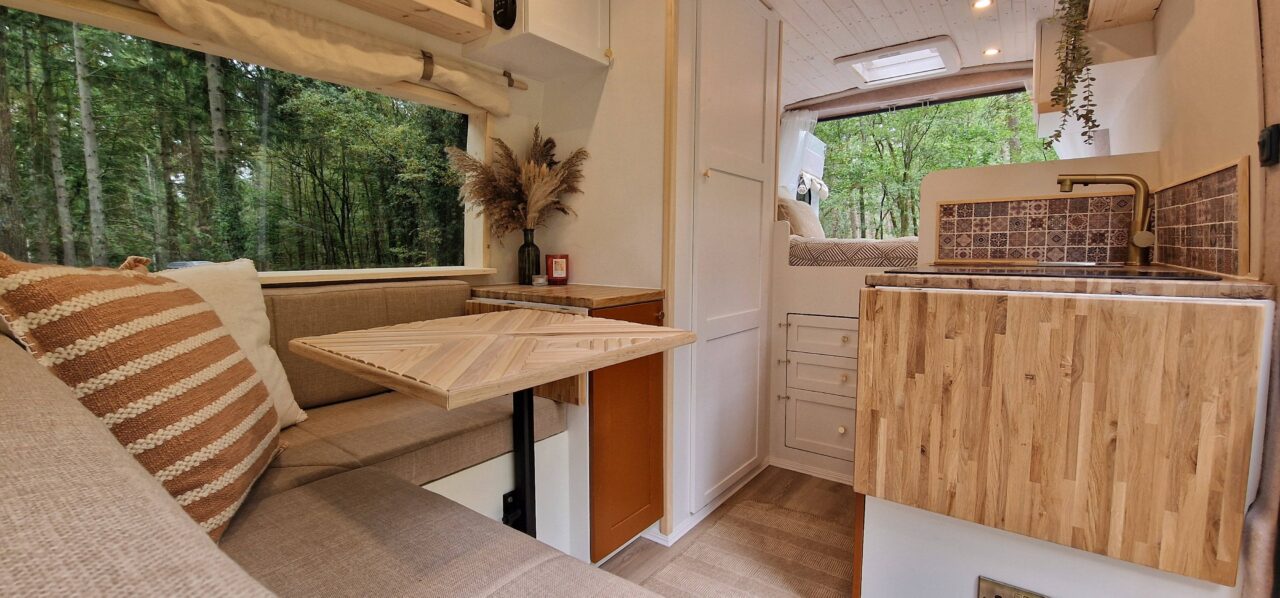
Payload: the number that really matters
Here’s where things get juicy.
Your payload is how much weight you can add to the van before you hit its legal maximum.
The simple formula is:
Payload = MAM – empty vehicle weight
So, if your van has a MAM of 3,500kg and weighs 2,300kg empty, you have around 1,200kg to play with.
That sounds like loads, doesn’t it?
But now start adding:
Insulation
Flooring
Cladding
Bed frame
Kitchen units
Fridge
Water tanks
Leisure batteries
Solar panels
Gas bottle
Toilet
Mattress
Passengers
Dog
Food
Clothes
Outdoor chairs
Bikes
Surfboards
Full tank of fuel
Full tank of water
Suddenly, that 1,200kg can start looking rather peckish.
And remember: the van needs to be legal when fully loaded for a trip, not just when empty on your driveway.
A realistic campervan weight checklist
When planning your conversion, make a rough weight budget before you buy materials.
Here’s what to include:
| Item | Approximate weight to consider |
|---|---|
| Driver and passengers | 75kg per adult is a sensible planning estimate |
| Full fuel tank | Often 70–100kg depending on tank size |
| Fresh water | 1 litre = 1kg |
| Leisure battery | Around 12–35kg for lithium, more for lead-acid |
| Fridge | 15–30kg |
| Solar panel | 8–20kg |
| Plywood and timber | Can add up very quickly |
| Mattress and bedding | 15–40kg |
| Kitchen units and worktop | Highly variable |
| Gas bottle | Often 10–25kg full |
| Bikes or sports kit | Easily 20–80kg+ |
| Food, clothes and camping gear | More than you think. Always. |

Where do you find a van’s weight limit?
Look for the manufacturer’s plate, sometimes called the VIN plate. This is usually found under the bonnet, inside the driver’s door frame, on the step, or near the seat base.
It normally shows a few key numbers:
- Gross vehicle weight / MAM — the maximum the van can weigh fully loaded
- Gross train weight — the maximum combined weight of van plus trailer
- Front axle limit
- Rear axle limit
That last bit is important. You can be under 3,500kg overall and still overload one axle, especially if you put lots of heavy kit at the back.
Rear kitchens, big water tanks, bike racks, spare wheels, pull-out storage and garages can all make the back end a little too enthusiastic.
The golden rule: weigh your van
The only way to know what your campervan actually weighs is to weigh it.
Use a public weighbridge once your conversion is finished, then again when it’s packed as it would be for a proper trip. GOV.UK has a public weighbridge finder, and recommends contacting the operator before going to check cost, access and opening hours.
For the most useful result, weigh it:
- With a full tank of fuel
- With fresh water filled to your usual travel level
- With passengers, if possible
- With bikes, boards, dogs and holiday kit on board
- With your normal food, clothes and camping gear packed
Basically, weigh the van as the van will actually travel. Not in its minimalist showroom era.
Choosing the right base van: weight vs space
Bigger vans give you more room, but not always more usable payload.
A large van may feel like the obvious choice for a camper conversion, especially if you want a fixed bed, shower, large kitchen or off-grid setup. But large vans are also heavier before you start converting them.
A long-wheelbase, high-roof van might give you glorious standing room and storage, but it may also leave you with less remaining payload than expected.
Smaller vans are lighter, easier to park and often more fuel-efficient, but they have less space for permanent furniture and heavy extras.
The sweet spot depends on how you travel.
Small vans: compact, clever and lighter on their feet
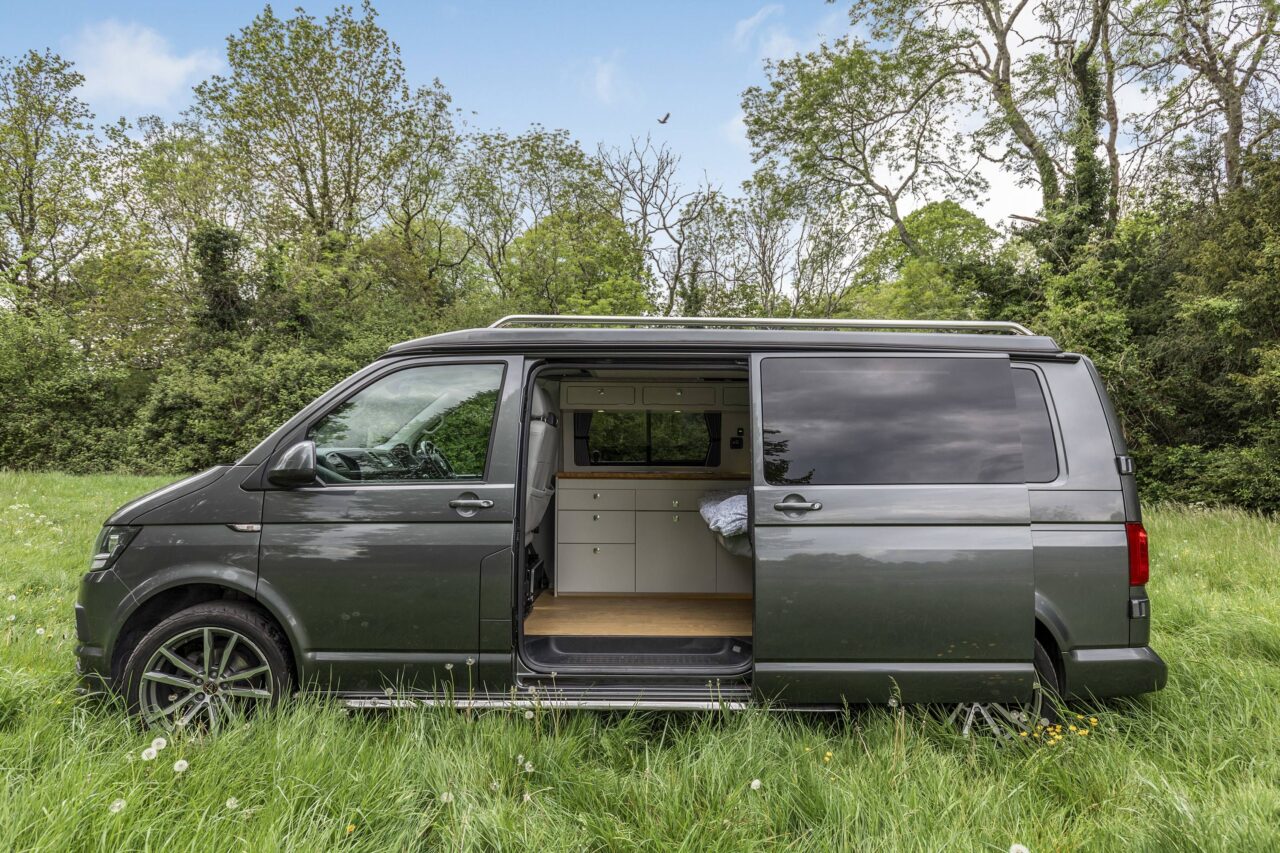
Examples include:
- Volkswagen Transporter
- Ford Transit Custom
- Vauxhall Vivaro
- Renault Trafic
- Nissan Primastar
Small and medium vans can be brilliant for weekend escapes, couples, solo travellers and anyone who wants a camper that still feels like a normal vehicle to drive.
They’re often easier to park, cheaper to run and less intimidating on narrow lanes. Very handy when the “scenic route” turns into a hedgerow negotiation.
The trade-off? Space is precious. You may need to choose between a fixed bed and a bigger kitchen, or between generous storage and open living space.
Weight-wise, smaller vans can be easier to keep light because the conversion is smaller, but they also have less space to hide bulky kit. Every kilo earns its keep.
Large vans: roomier, comfier and easier to overbuild
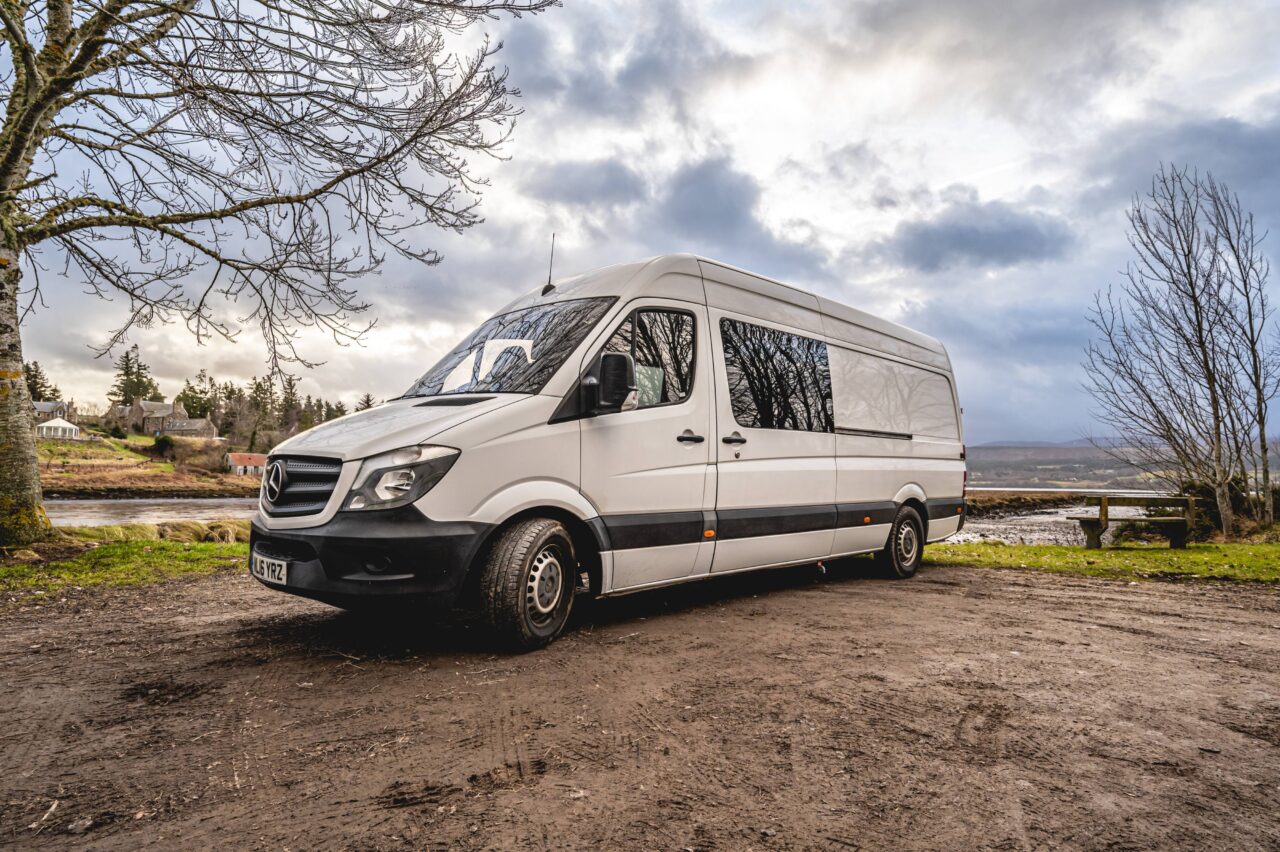
Examples include:
- Mercedes Sprinter
- Volkswagen Crafter
- Ford Transit
- Peugeot Boxer
- Citroën Relay
- Fiat Ducato
Large vans are popular for good reason. They offer more standing height, more layout options and more room for creature comforts.
They’re great if you want:
A fixed bed
A proper kitchen
More storage
Off-grid electrics
A toilet or shower
Family-friendly layouts
Longer trips or full-time travel
But bigger vans can tempt you into building bigger, heavier and more complicated. Before you know it, you’ve added a tiled splashback, a Belfast sink and enough timber to build a woodland cabin.
Lovely? Yes. Legal at 3,500kg? Maybe not.
If you’re going large, plan the weight from the beginning.
Materials matter: how to keep your campervan conversion lighter
A lighter van is usually nicer to drive, more fuel-efficient and less stressful to pack.
Here are a few ways to save weight without making the van feel flimsy:
- Choose lightweight ply where suitable
- Avoid overbuilding with thick timber
- Use lightweight wall and ceiling cladding
- Keep water tanks sensible rather than enormous
- Choose lithium batteries over traditional lead-acid if budget allows
- Think carefully before adding tiles, stone, heavy worktops or big shower rooms
- Use soft storage instead of lots of heavy cabinetry
- Keep the layout simple and multifunctional
- Avoid carrying full water tanks when you don’t need to
This does not mean your van has to feel sparse or soulless. Quite the opposite. The best conversions are thoughtful. Every cupboard, cushion and clever little cubby earns its place.
What happens if your campervan is overweight?
Driving an overweight campervan is not just a paperwork problem. It can affect braking, steering, tyre wear, suspension and insurance.
It can also put you on the wrong side of the law.
A vehicle is overloaded if it exceeds its plated limits, and a vehicle can be overloaded on axle weight, gross weight or train weight separately.
In human terms: even if your total weight looks fine, a too-heavy rear axle can still be a problem.
Not ideal when all you wanted was a wholesome weekend in Wales.
Campervan speed limits: does weight make a difference?
Yes, it can.
GOV.UK lists different national speed limits for motorhomes depending on whether they are not more than, or more than, 3.05 tonnes maximum unladen weight. Motorhomes over 3.05 tonnes unladen are limited to 50mph on single carriageways and 60mph on dual carriageways, while motorways remain 70mph, unless towing.
Most vans also have lower limits than cars and must usually follow goods vehicle limits unless they qualify as car-derived vans or dual-purpose vehicles.
So yes: weight can affect how fast you’re legally allowed to cruise.
Adventure responsibly.
Try before you buy: hire a campervan first
Before buying a base van, it’s genuinely worth hiring a campervan for a few nights.
Not because we’re biased. Although, fine, we are a tiny bit biased.
Hiring lets you test what actually matters to you:
- Can you live without standing height?
- Do you want a fixed bed or a bed you make up each night?
- Is a tiny kitchen enough?
- Do you need a toilet?
- How much storage do you really use?
- Does a bigger van feel freeing or stressful?
- Would you rather have more space or easier parking?
A weekend away can teach you more than 40 hours of scrolling van tours at midnight.
Browse Quirky Campers for hire and shamelessly gather ideas for your own future build.
Ready to get inspired?
Not sure what size van, layout or setup will suit you best? Hire a handcrafted campervan and try vanlife before you build your own.
Browse Quirky Campers for hire
Planning a DIY build? Our campervan conversion guide walks you through the practical bits, from layout planning to insulation, electrics and those “wish we’d known that sooner” details.
Get the campervan conversion guide
FAQS
Payload = MAM – empty vehicle weight
Then subtract the estimated weight of your conversion, passengers and travel kit.
Yes. Water weighs 1kg per litre. A 100-litre tank adds 100kg before you’ve even packed the pasta.
The best choice is usually a van with enough payload for your intended layout. Don’t just choose by size. Check the plated MAM, empty weight, axle limits and how much your conversion is likely to weigh.
Often, yes but it depends on the van and build. A compact or carefully designed conversion can sit comfortably under 3,500kg. A large van with a shower, big electrics, fixed furniture, full water tanks and lots of storage may struggle.
Most Category B car licences allow you to drive a motorhome or campervan up to 3,500kg MAM. If the motorhome is between 3.5 and 7.5 tonnes, you need Category C1. Over 7.5 tonnes needs Category C.