



If you’re researching your first campervan or motorhome, you’ve probably noticed these terms used interchangeably. They’re not the same thing, and the differences matter more than you might think.
Beyond the obvious size difference, campervans and motorhomes have different licence requirements, insurance categories, speed limits, and running costs. Choosing the wrong one could mean needing an additional driving licence, paying thousands more in annual running costs, or finding yourself unable to park in town centres.
This guide explains the practical differences that actually affect your ownership experience, with a decision flowchart at the end to help you work out which suits your needs.
What’s the Actual Difference?
Campervans
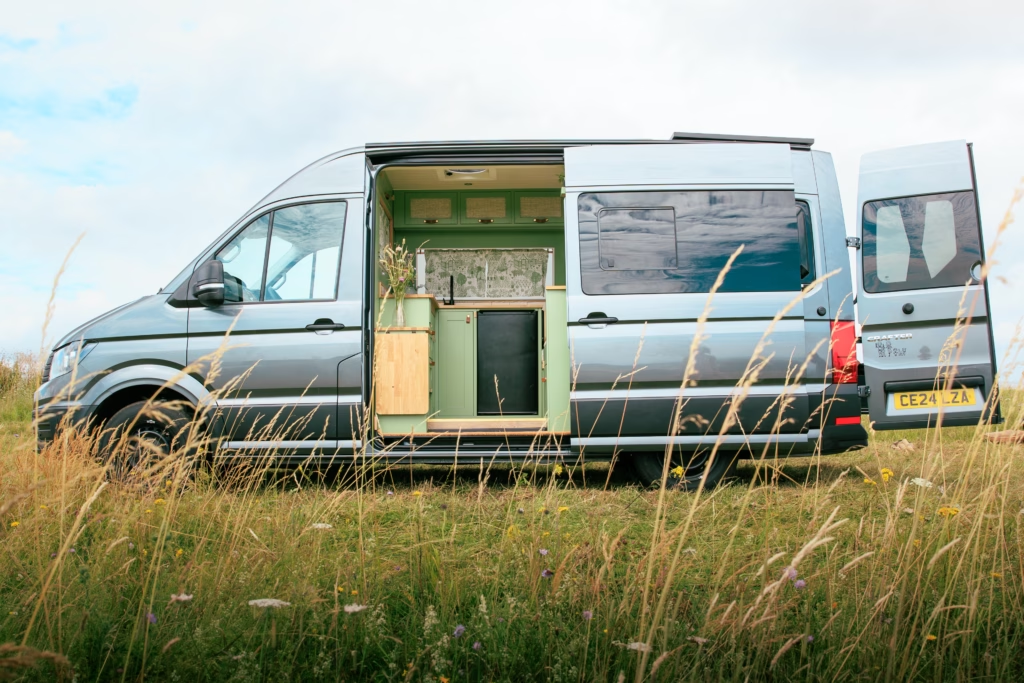
A campervan is built on a standard van chassis, typically a VW Transporter, Ford Transit Custom, Mercedes Vito, or Renault Trafic. The driving cab integrates with the living space, often with swivel front seats that become part of the lounge.
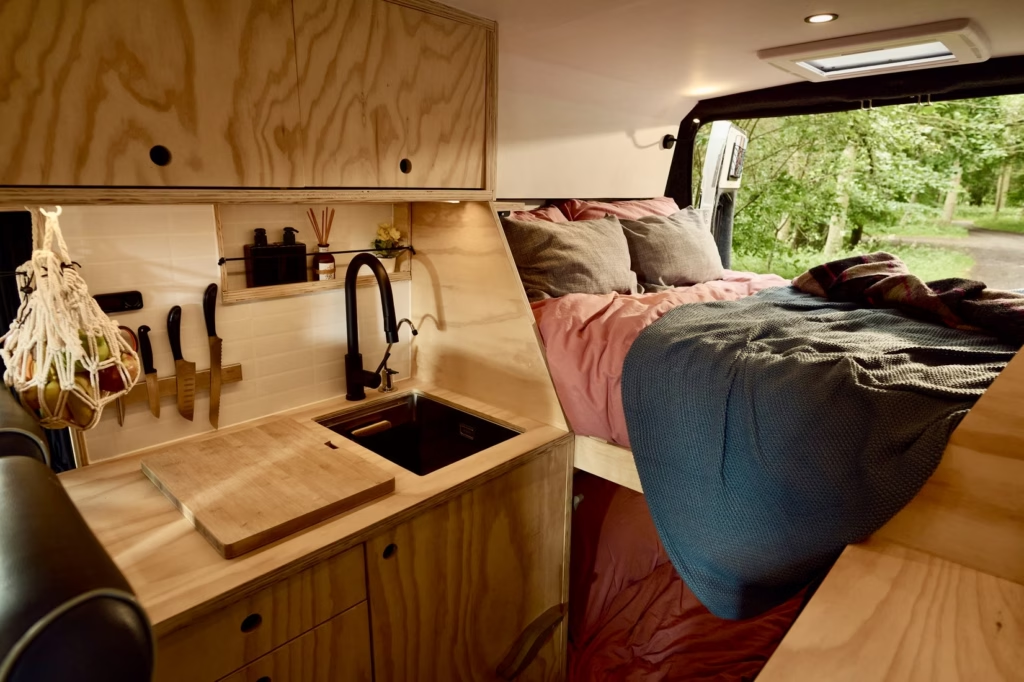
Most campervans are under 6 metres long and focus on sleeping and cooking facilities. The key distinguishing feature: campervans typically don’t have a dedicated indoor toilet or shower. You use campsite facilities or a portable loo.
Many smaller campervans have pop-top roofs that provide standing height when parked but fold flat for driving and parking in standard multi-storey car parks.
Motorhomes
A motorhome is purpose-built as a mobile home, typically on a larger chassis like the Fiat Ducato. The driving cab is often separate from the living quarters, with the habitation area built onto the chassis rather than converted within an existing van shell.
Motorhomes include comprehensive facilities: full kitchen with larger fridge and oven, dedicated bathroom with toilet and shower, fixed beds that don’t need converting daily, and significantly more storage including underfloor ‘garage’ space.
Categories include coachbuilt (living area built onto a cab), low-profile (streamlined coachbuilt), A-Class (fully integrated cab and body), and American RVs (large, fully self-contained).
Quick Comparison
| Feature | Campervan | Motorhome |
| Typical length | 4.5–6 metres | 6–8+ metres |
| Base vehicle | Panel van (Transit, T6, Vito) | Cab chassis (Ducato, Sprinter) |
| Bathroom | Usually none | Toilet & shower included |
| Standing height | Pop-top or high-top only | Full height throughout |
| Beds | Convert from seating daily | Often fixed/permanent |
| Daily driver use | Practical | Impractical |
Driving Licence Requirements
This is where many buyers get caught out. The critical threshold is 3,500kg Maximum Authorised Mass (MAM), not the vehicle’s actual weight, but its maximum permitted loaded weight shown on the VIN plate.
Under 3,500kg MAM
Standard Category B (car) licence covers you. This includes most campervans and some smaller motorhomes. No additional testing required regardless of when you passed your test.
3,500kg to 7,500kg MAM
Passed your driving test before 1 January 1997? You automatically have Category C1 entitlement on your licence and can drive vehicles up to 7,500kg. You’ll need a medical examination (D4 form) when renewing.
Passed after 1 January 1997? You need to obtain a Category C1 licence. This involves:
- Medical examination (D4 form completed by your GP)
- Provisional C1 application (D2 form)
- Theory test: 100 multiple choice questions (pass mark 85), plus hazard perception and case studies
- Practical driving test in a C1 vehicle
If you passed before 1997 (grandfather rights): your C1 remains valid until age 70 with no renewal required. At 70, you must apply by post with a D4 medical to retain C1, as online renewal automatically loses it. After 70, renew every 3 years with a medical. If you obtain C1 by test: medical required at 45, then renew every 5 years until 65, then annually with a medical.
Over 7,500kg MAM
Requires a full Category C (HGV) licence. This applies mainly to American RV-style motorhomes, which are uncommon in the UK and often exceed legal size limits (maximum width 2.55m, maximum length 12m).
| Vehicle Weight (MAM) | Test passed before 1/1/1997 | Test passed after 1/1/1997 |
| Up to 3,500kg | Category B (standard) | Category B (standard) |
| 3,500kg – 7,500kg | Already have C1 | Must obtain C1 licence |
| Over 7,500kg | Category C required | Category C required |
Speed Limits
A different weight threshold applies here: 3.05 tonnes unladen weight (the vehicle’s weight without passengers or payload, not the same as MAM).
| Road Type | Under 3.05t unladen | Over 3.05t unladen |
| Built-up areas | 30mph (20mph Wales) | 30mph (20mph Wales) |
| Single carriageways | 60mph | 50mph |
| Dual carriageways | 70mph | 60mph |
| Motorways | 70mph | 70mph |
Motorhomes over 3,500kg MAM also cannot use lane 3 (the outside lane) on motorways with three or more lanes.
Most campervans fall under the 3.05-tonne threshold and follow car speed limits. Many motorhomes exceed it, particularly coachbuilts and A-Class models.
Insurance Differences
Both campervans and motorhomes require specialist insurance, as standard car or van policies won’t cover the habitation area (kitchen, sleeping quarters, gas and water systems).
Key coverage differences from car insurance:
- Higher personal contents cover (typically £1,000–£5,000 vs £500 for car insurance)
- Coverage for awnings, generators, gas bottles, outdoor equipment
- Breakdown recovery suitable for larger vehicles
- Extended European cover (90–365 days available)
- Habitation equipment covered (worktops, shower trays, appliances)
Typical annual premiums range from £300 to £1,500 depending on vehicle value, age, storage location (secured compounds reduce premiums), security features, and whether you’re using it for leisure or full-time living.
Larger motorhomes attract higher premiums due to increased repair costs and higher values. For detailed guidance, see our campervan insurance guide.
Running Costs Compared
Road Tax (VED)
Road tax rates depend on weight category and registration date:
| Category | Annual Rate (2025) |
| Under 3,500kg (PLGV), post-2017 | £195 |
| Under 3,500kg, engine over 1,549cc, pre-2001 | £360 |
| Over 3,500kg (PHGV) | £171 |
| Over 40 years old | Exempt (must apply) |
Interestingly, heavier motorhomes (over 3,500kg) actually pay less road tax than lighter ones under the Private Heavy Goods Vehicle rate.
Fuel Economy
This is where the cost difference becomes significant:
| Vehicle Type | Typical MPG (diesel) |
| Campervans (VW T6, Transit Custom) | 28–35 mpg |
| Panel van conversions (Ducato-based) | 28–35 mpg |
| Low-profile coachbuilt motorhomes | 25–30 mpg |
| Standard coachbuilt/overcab | 18–25 mpg |
| A-Class motorhomes | 18–25 mpg |
| American RVs (petrol) | 6–10 mpg |
Over a 5,000-mile year at £1.45/litre diesel, a campervan averaging 30mpg costs roughly £1,100 in fuel. A coachbuilt averaging 22mpg costs approximately £1,500, £400 more annually.
Ferries and toll roads also charge by vehicle length and height, making campervans cheaper for European travel. For full cost breakdowns, see our campervan running costs guide.

Parking and Access
Height restrictions increasingly determine where you can go:
| Vehicle Type | Typical Height |
| Pop-top campervan (roof down) | 1.9–2.0m |
| High-top campervan | 2.6–2.8m |
| Low-profile motorhome | 2.6–2.8m |
| Standard coachbuilt | 2.8–3.2m |
| Overcab motorhome | 3.0–3.5m |
Most multi-storey car parks have barriers at 1.9–2.1 metres. Only pop-top campervans with the roof lowered reliably fit. High-top campervans and all motorhomes are excluded from most town centre parking.
Standard parking bays measure roughly 2.4m × 4.8m. Campervans typically fit; larger motorhomes often don’t and may need to pay for multiple bays. Many coastal and beach car parks now specifically exclude motorhomes.
For wild camping (which requires landowner permission throughout the UK, except limited Scottish access rights), campervans are more discreet and attract less attention.
Purchase Prices (2025 Market)
New Vehicles
| Vehicle Type | Typical Price Range |
| Basic campervan conversion | £60,000–£80,000 |
| VW California | From £63,376 |
| Entry-level coachbuilt motorhome | £65,000–£70,000 |
| Mid-range family motorhome | £50,000–£100,000 |
| Luxury A-Class motorhome | £100,000–£450,000+ |
Used Market
The used market offers better value, particularly 5–10-year-old vehicles:
- Older micro campervans (15+ years): From £7,000
- Used VW California (80,000 miles): From £35,000+
- Used 4-berth coachbuilt motorhomes: From £25,000
- Family motorhomes (sweet spot): £25,000–£50,000
Prices stabilised in 2024/25 after post-COVID peaks, with heavy discounting on dealer stock. For buying guidance, see our campervan buying guide.
Which Suits You? Decision Flowchart
Work through these questions to identify which vehicle type matches your needs:
1. How many people will regularly travel?
- 1–2 people → Campervan likely sufficient
- 3+ people → Motorhome usually more practical
2. Do you need an onboard toilet and shower?
- Essential → Motorhome
- Can use campsite facilities → Campervan works
3. Will you use it as a daily driver?
- Yes → Campervan (preferably pop-top)
- No, dedicated leisure vehicle → Either works
4. Do you need to access town centre car parks?
- Yes → Pop-top campervan (fits under 2m barriers)
- No, happy with surface parking → Either works
5. What’s your driving licence situation?
- Passed before 1997 → Either (you have C1)
- Passed after 1997, won’t get C1 → Campervan or sub-3,500kg motorhome
- Passed after 1997, willing to get C1 → Either
6. Trip length and frequency?
- Weekend breaks, occasional weeks → Campervan
- Extended touring (weeks/months), full-time living → Motorhome
7. Budget sensitivity to running costs?
- Running costs matter significantly → Campervan (better fuel economy, cheaper ferries)
- Running costs less important than comfort → Motorhome
Summary: Choose a Campervan If…
- You’re travelling as a couple or solo
- You want to use it as a daily driver
- You need town centre parking access
- Running costs matter
- You’re happy using campsite facilities
- You prefer spontaneity and wild camping
Summary: Choose a Motorhome If…
- You’re travelling as a family or group
- You need an onboard bathroom
- You want fixed beds without daily conversion
- You’re planning extended trips or full-time living
- You prioritise comfort over compactness
- You have (or will obtain) a C1 licence if needed
Ready to Browse?
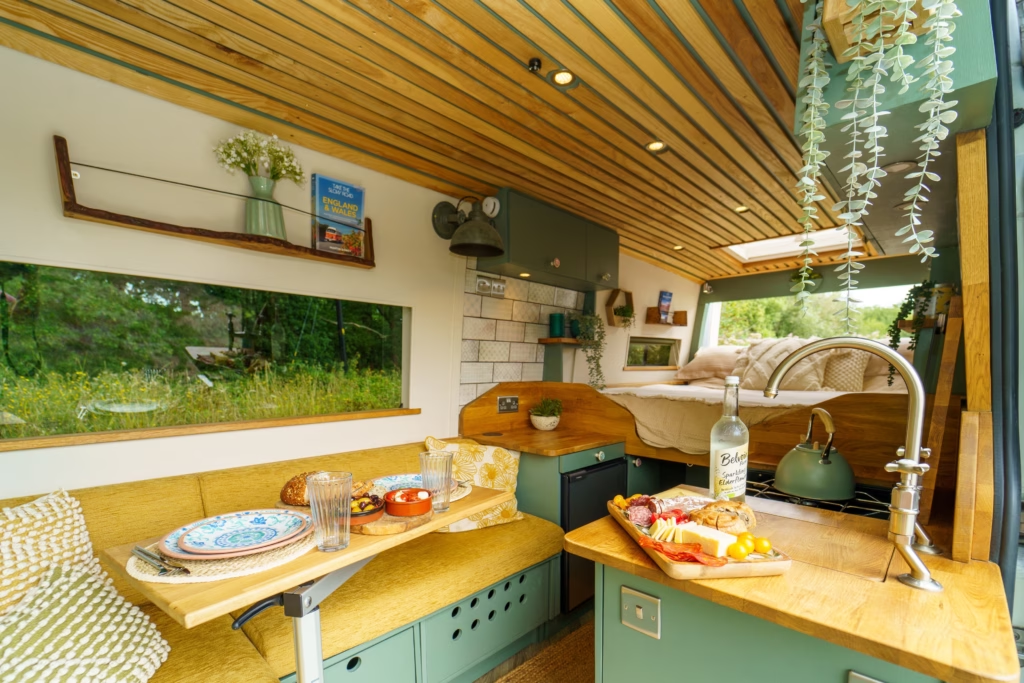
Quirky Campers features hand-picked, privately owned vehicles available for hire or purchase. Every listing is vetted for quality and originality.
- Browse campervans for sale – Converted vans from verified sellers
- See motorhomes for sale – Coachbuilt and A-Class options
- Hire a campervan – Try before you buy
Frequently Asked Questions
Can I drive a motorhome on a normal car licence?
Yes, if the motorhome’s Maximum Authorised Mass (MAM) is under 3,500kg. Larger motorhomes require a C1 licence. If you passed your driving test before 1 January 1997, you automatically have C1 entitlement for vehicles up to 7,500kg.
What’s the difference between MAM and unladen weight?
MAM (Maximum Authorised Mass) is the maximum the vehicle can legally weigh when loaded, which determines licence requirements. Unladen weight is the vehicle empty of passengers and cargo, which determines speed limits. A motorhome might have a 3,800kg MAM (requiring C1) but weigh 3,200kg unladen (following car speed limits).
Is a campervan cheaper to insure than a motorhome?
Generally yes, because campervans typically have lower values and cheaper repair costs. However, your premium depends more on your claims history, storage location, and security features than the vehicle category. Both require specialist campervan/motorhome insurance.
Can I use a motorhome as a daily driver?
Technically yes, but it’s impractical. Motorhomes are too tall for most car park barriers, use significantly more fuel than a car, and the interior equipment (fridge, water tank, etc.) wears with daily driving vibration. Campervans, particularly pop-tops, work much better as daily drivers.
Do campervans have toilets?
Most don’t. The typical campervan lacks a dedicated bathroom, so you’d use campsite facilities or a portable toilet stored in a garage compartment. Some larger panel van conversions (Fiat Ducato-based) include wet-room style bathrooms, blurring the line with motorhomes.
Which holds its value better?
Well-maintained VW-based campervans (California, Transporter conversions) hold value exceptionally well due to strong demand and brand recognition. Motorhomes depreciate faster initially but stabilise after 3–5 years. Unique, high-quality conversions from both categories command premiums in the used market.
What about Clean Air Zones?
Both campervans and motorhomes face CAZ charges if they don’t meet emissions standards. Euro 6 diesels (typically 2015+) are usually exempt. Older vehicles may face charges of £10–£60 daily in cities like Birmingham, Bristol, and London. Heavier motorhomes classified as HGVs face the higher charges.