



The two of you, a kettle, and somewhere to be by Friday night. That is the brief most couples actually have, and it is why a two-berth campervan turns out to be the right answer far more often than buyers expect when they start looking.
It is tempting to buy big “just in case”. Resist it. A van sized for how you really travel is cheaper to buy, cheaper to run and far nicer to drive down a Cornish lane. Here is how to choose well.
What “2 berth” actually means
A berth is a sleeping space, not a seat. A two-berth campervan sleeps two adults. That is a separate number from the belted travel seats, which is how many people can legally ride along. You can have a two-berth van with four belted seats, or a van that seats two and sleeps four. When you are reading a listing, check both figures, because they answer different questions: where everyone sits while you drive, and where everyone sleeps when you stop.
Fixed bed or convertible: the big decision
This is the choice that shapes everything else. A fixed bed is always made up and ready, which is a real luxury after a long day, and the space underneath usually becomes a garage for bikes, chairs and muddy boots. The trade-off is that the bed eats floor space all day, every day.
A convertible bed, whether a rock and roll bed or a pull-out, gives you that floor space back during the day and turns into a sleeping area at night. The cost is the small ritual of making it up and breaking it down each time. For couples touring for a week or more, a fixed bed usually wins. For weekenders and anyone using the van around town in the week, a convertible keeps the whole thing smaller and more useful. Our guide to campervan layouts goes through the common floorplans in more detail if you want to picture how each one lives.
The best base vehicles for two
The VW Transporter, in T5 and T6 form, is the obvious starting point. It drives like a large car, slips into a normal parking bay, clears most height barriers, and holds its value better than almost anything. Most are set up with a rock and roll bed and a pop-top roof. You pay a clear premium per foot of van, but you get the easiest thing to own and the easiest thing to sell.
Step up in size and the Ford Transit Custom and the smaller Fiat Ducato, Peugeot Boxer and Citroen Relay conversions give you more for your money. A short or medium-wheelbase version has room for a small fixed bed, a proper kitchen and sometimes even a compact washroom, for less than an equivalent VW. As a rough guide, a fixed double in a van is usually somewhere around 1.2 to 1.4 metres wide and a little under two metres long, so if either of you is tall it is worth taking a tape measure to a viewing rather than trusting the brochure.
Pop-top or high-top?
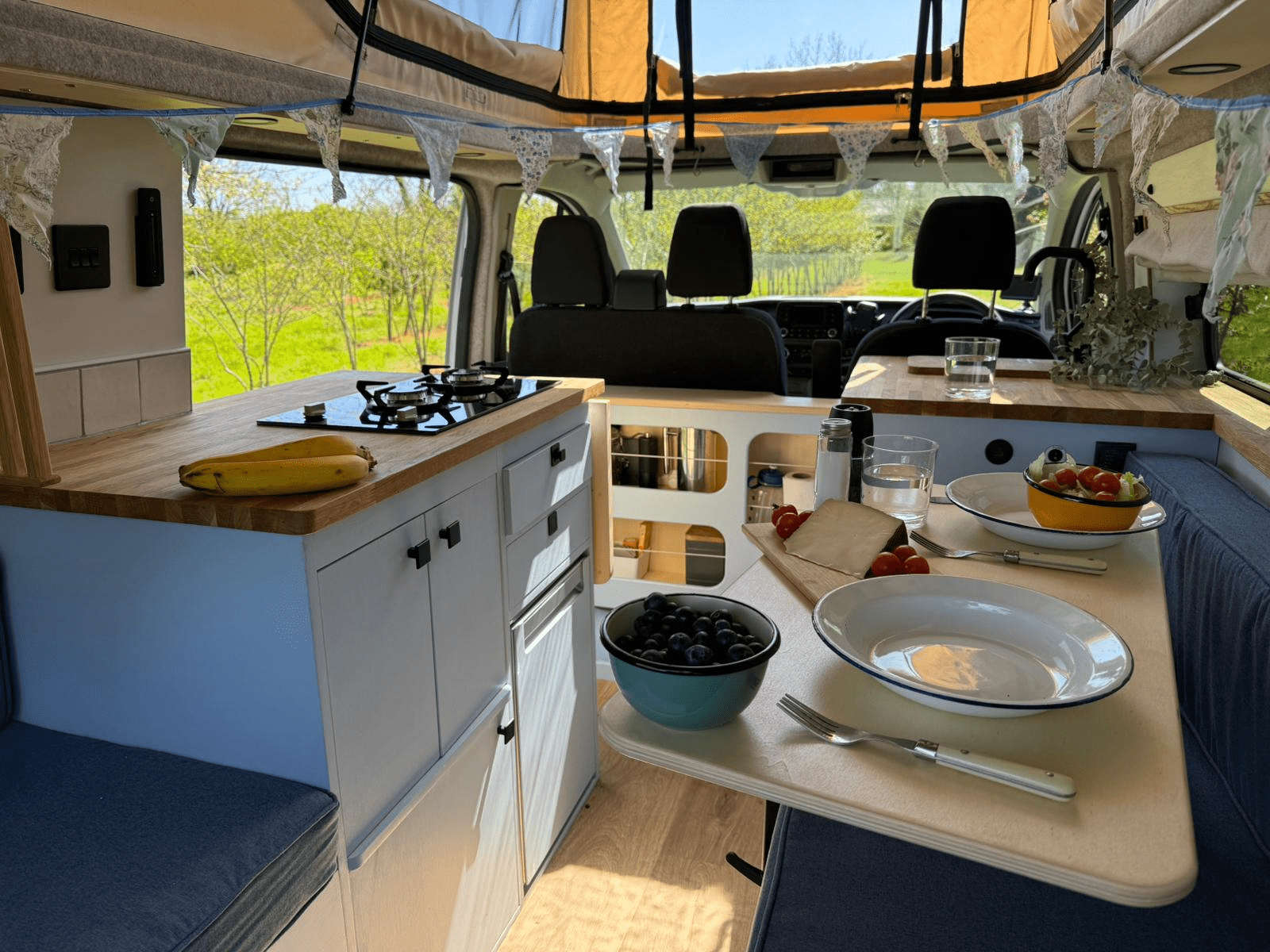
For couples, the roof is almost as big a decision as the bed. A pop-top, the elevating roof you see on most VW campers, keeps the van low enough to clear height barriers and slot into a home garage or a standard car park, then lifts to give you standing room and often a second small double bed up in the canvas. That makes a compact van surprisingly flexible. The downsides are that canvas needs looking after and is less insulated than a solid roof, so a pop-top can feel colder on a frosty night.
A high-top, the fixed tall roof on most Transit and Ducato conversions, gives you full standing room all the time and far better insulation, which makes a real difference for autumn and winter trips. The catch is height: a high-top will not fit under some car park barriers or into a typical domestic garage, so check where you plan to keep it before you fall for one.
What to expect inside a two-berth
A well-sorted two-berth packs in more than you would think. Most have a kitchen with a gas hob, a sink and a fridge, a leisure battery to run lights and sockets away from a hookup, and some form of heating, usually a diesel or gas blown-air system that transforms the van in cold weather. Many add a portable or fixed toilet, and the better-equipped ones squeeze in a compact washroom with a shower. Solar on the roof is increasingly common and worth having if you like to camp off-grid. Because a smaller van is easier to keep under the 3.5 tonne mark and more likely to meet clean air standards, a Euro 6 diesel two-berth will usually drive into London’s ULEZ and other clean air zones without paying the daily charge, which keeps city trips cheap.
Why smaller can mean better built
Here is something that surprises people. On a smaller van, the converter is spending their budget on fewer square metres, so the quality of the fit-out per pound is often higher, not lower. A well-built two-berth can feel more solid and better finished than a bigger van built to the same total price. A smaller van is also cheaper to fuel, easier to heat, simpler to park, and more likely to avoid clean air zone charges, which keeps your running costs down year after year.
Don’t over-buy
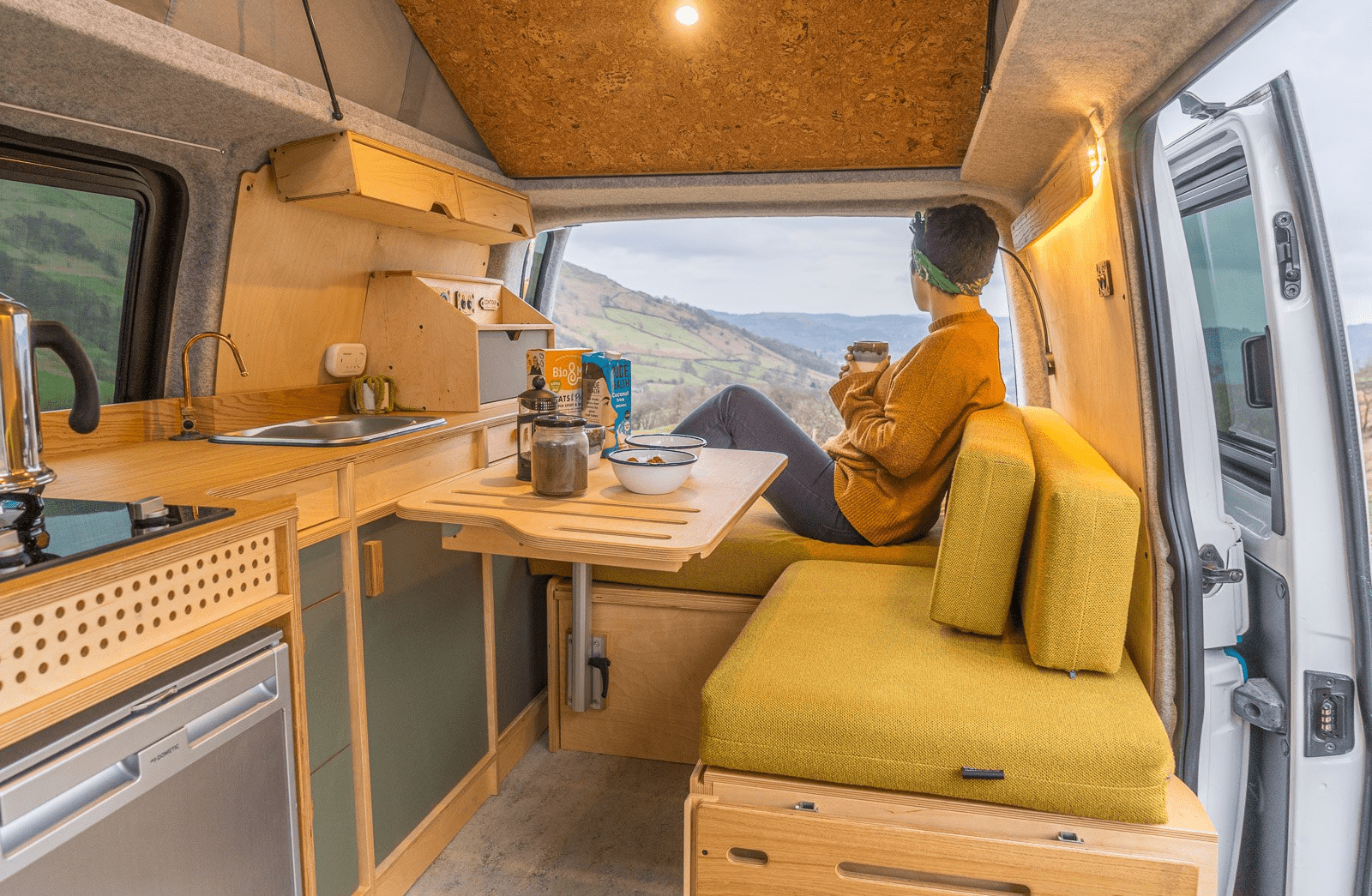
Plenty of couples buy a four-berth for the occasional visitor, then spend every actual trip travelling as two and wrestling a van they do not need around tight lanes and small car parks. If guests are rare, an awning or a rooftop tent is a far cheaper way to add the odd extra bed than running a bigger van that costs more all year round. Buy for the trips you will really take. If you are not yet sure that van life suits you at all, it is worth hiring before you buy to test it properly first.
Finding your two
Whether you are after a compact VW for weekends or a slightly larger conversion with a fixed bed for longer trips, the choice is wide. It is also easy to hire a two-berth for a weekend first, to be sure the size and layout suit the two of you before you buy. Browse the 2 berth campervans for sale on the Quirky marketplace, and run anything you like the look of through a proper pre-purchase checklist before you part with any money.