



The Ford Transit is the default choice for about half the professional converters we speak to, and for good reason. Parts are everywhere, mechanics aren’t scared of them, and the donor vehicle holds its value better than most rivals. But not every Transit makes a good campervan, and the gap between a clever conversion and an expensive mistake is wider than buyers think.
This guide is for anyone searching for a Transit conversion who wants to know what actually matters before handing over the money. No marketing waffle, just the things we’d check if we were buying one tomorrow.
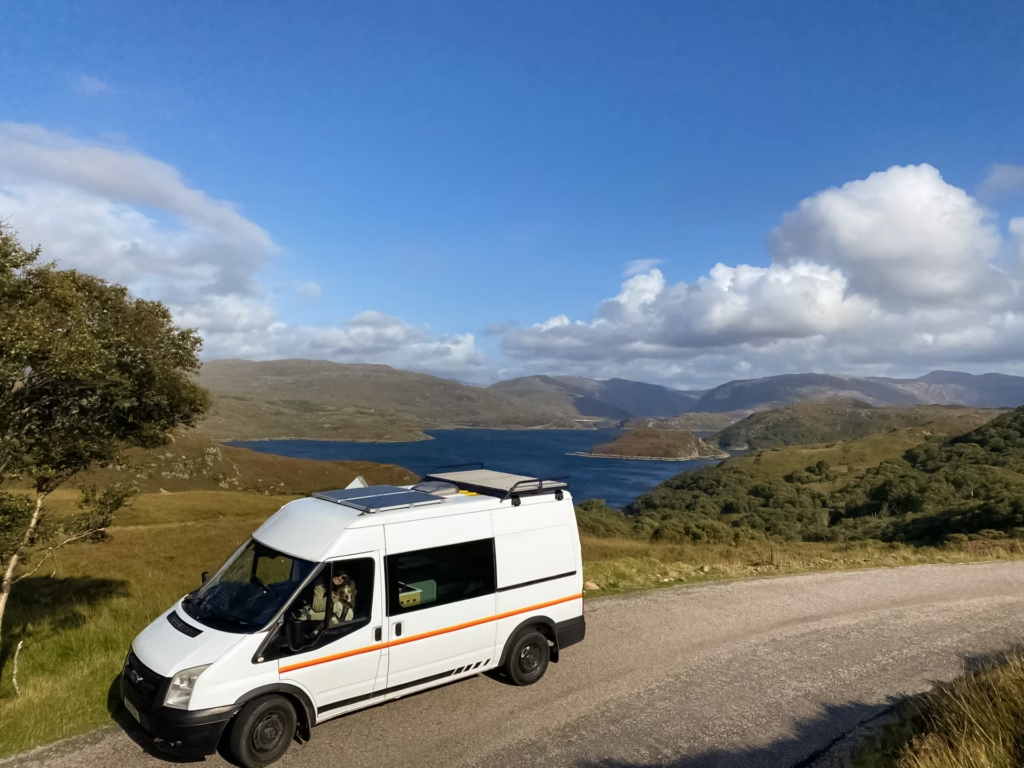
Why Transits dominate the UK conversion market
Three reasons. First, the fleet operator market means used Transits are cheap and plentiful, which keeps base vehicle costs sensible. Second, independent garages across the UK can service them without specialist kit, which matters a lot when you’re 200 miles from home and something goes wrong. Third, the body shape suits conversion work. The side walls are flat enough to fit furniture against, the roof can take a high-top without structural gymnastics, and the sliding door opening is usable for a kitchen or garage access.
The downside is that “Transit” covers roughly a quarter of a century of very different vans. A 2004 MK6 and a 2022 MK8 share a badge and not much else. Knowing which generation you’re looking at is the first real filter.
The three generations you’ll see on the market
The MK6 (2000 to 2006) is the old-school Transit with the 2.0 or 2.4 Duratorq diesel. Cheap to buy, simple to fix, and surprisingly well built. If you want a rolling project and you’re comfortable with older diagnostics, this generation gives you the most conversion for your money. Rust is the enemy. Check the rear wheel arches, the sills and the bottom of the tailgate. If you can see bubbling paint, walk away or factor in serious welding.
The MK7 (2006 to 2013) brought more refinement and the 2.2 and 2.4 TDCi engines. This is the sweet spot for most self-build conversions we see on Quirky Campers. They’re old enough to be affordable, modern enough to be comfortable on a long drive, and the engines have a solid reputation when maintained. Watch for turbo issues on higher-mileage examples and dual mass flywheel failure on the 2.2.
The MK8 (2014 onwards) is the current shape. Early MK8s kept the 2.2 TDCi from the previous generation until 2016, when Ford replaced it with the 2.0 EcoBlue. More refined, better fuel economy, and a proper modern driving experience. The big thing to know before buying any 2016 onwards Transit with the 2.0 EcoBlue is the wet timing belt. It runs in engine oil, and a well-documented issue with premature belt degradation has caught out plenty of owners. Ford lowered the recommended service interval to 6 years or 100,000 miles in response, and many independent specialists now recommend changing it sooner. If you’re looking at any 2016 to 2023 EcoBlue Transit, ask specifically whether the belt has been changed, when, and by whom. A failed wet belt can run from a couple of thousand pounds to a full engine replacement if the debris starves the oil system.
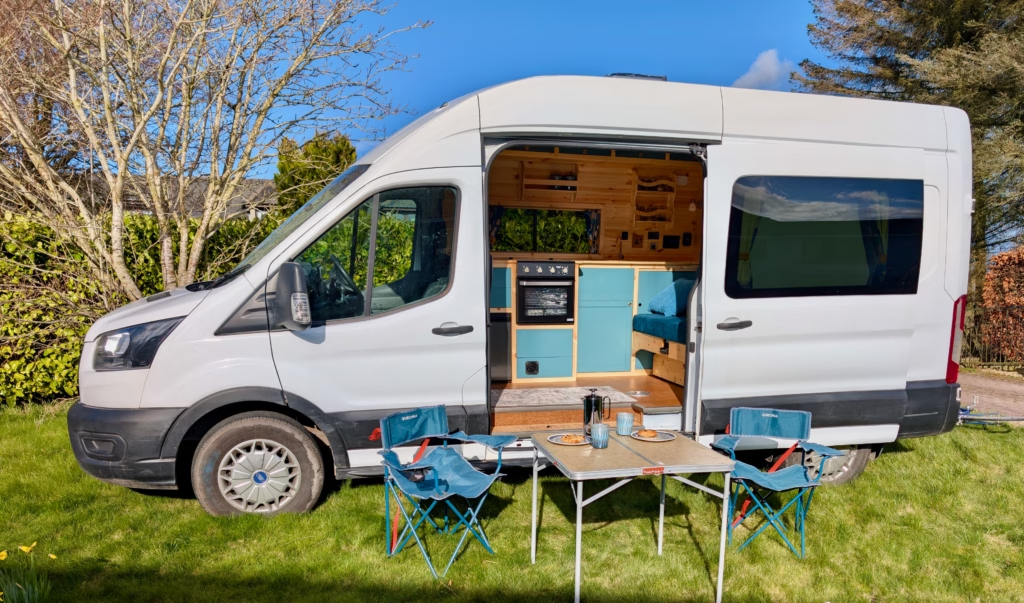
Wheelbase and roof height: pick before you fall in love
Transits come in short, medium, long and jumbo wheelbase, with low, medium and high roof options. The combination you pick dictates what layouts work, where you can park and how the van drives.
A medium wheelbase high top is the Goldilocks option for two people. You get standing headroom, enough length for a fixed bed and a proper kitchen, and the van still fits in most standard parking bays. Long wheelbase gives you a proper garage under a fixed rear bed, which is brilliant if you cycle or carry bulky kit. Jumbo is a lot of van to live with day to day, and in cities it’s genuinely inconvenient.
If you’re still deciding what layout suits you, our campervan layouts explained guide breaks down the main options with pros and cons for different travel styles.
The five things we check on every Transit conversion
First, the DVLA log book. Has the van been reclassified as a motor caravan? Reclassification isn’t mandatory, but it can affect insurance, speed limits on single carriageways and resale value. If the seller claims it’s been reclassified, ask to see the V5C and check the body type field yourself. The full criteria are covered in the DVLA reclassification rules guide.
Second, the habitation electrics. A properly installed 12V system should have a dedicated leisure battery, a fused distribution board and cables sized for the load. If you open a cupboard and see wires joined with terminal blocks or electrical tape, the whole system needs rethinking. Our campervan electrics explained guide walks through what a good install looks like.
Third, the gas certificate. If the van has a hob or heater running on LPG, there should be an in-date gas safety certificate from a Gas Safe engineer. No certificate means no insurance for most providers, and it means you can’t verify the install is safe. Insist on seeing one dated within the last twelve months.
Fourth, damp. Press your hands against the walls around the windows, along the floor edges, and inside any cupboard that backs onto an exterior panel. Anywhere soft is bad news. A damp meter reading above 20% in the walls means water is getting in somewhere, and finding the source is rarely cheap.
Fifth, the mechanical side. Get an independent pre-purchase inspection from a Transit specialist, not from whoever the seller recommends. It’s £150 to £250 and has saved us from several very expensive mistakes.
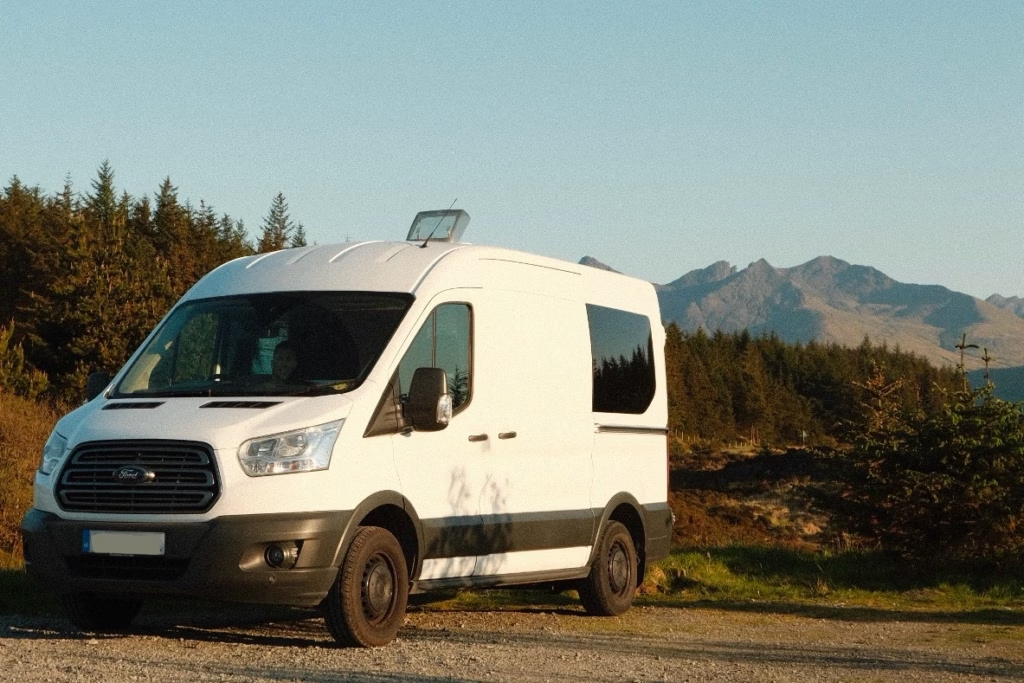
What’s a fair price for a Transit camper in 2026?
Rough guide based on what we see moving through the campervans for sale marketplace. A tidy self-build MK7 with a basic but usable conversion is £12,000 to £18,000. A professionally converted MK7 with proper electrics, gas and insulation is £20,000 to £30,000. MK8 conversions start around £28,000 for decent self-builds and climb well past £50,000 for high-end professional work.
The single biggest price variable isn’t the van, it’s the conversion quality. We’ve seen £8,000 MK6 base vehicles with £15,000 of conversion work that feel better built than £45,000 dealer motorhomes. The badge on the front doesn’t tell you what’s behind the panels. A full pre-purchase inspection checklist is worth printing out and taking with you.
Should you buy a Transit or something else?
If you want practicality, affordable running costs and a van you can fix anywhere in the UK, the Transit is hard to beat. If you want the most refined drive, a VW Crafter or Mercedes Sprinter will feel nicer on a motorway. If you want absolute simplicity and low purchase price, an older Transit or a Fiat Ducato will stretch your budget further.
For most first-time buyers we speak to, a well-converted MK7 Transit hits the right balance. Affordable enough that insurance and running costs don’t become a burden, modern enough to be a comfortable daily drive, and flexible enough to suit everything from weekends away to a full summer touring Europe.
Ready to see what’s out there? Browse the current Ford Transit campervans for sale on Quirky Campers, where every listing is a privately owned, hand-picked conversion rather than a dealer forecourt special.