

Home » Glastonbury Fallow Year 2026: What It Means and Where to Go Instead
Glastonbury Fallow Year 2026: What It Means and Where to Go Instead
If you’ve been planning your 2026 around a trip to Worthy Farm, I’ve got some news. Glastonbury won’t be happening in 2026. It’s a fallow year.
Now, before you start feeling too disappointed, let me explain what’s actually going on here – and why it’s actually a good thing. Plus, we’ll look at what you can do with that free weekend in June 2026 (spoiler: there are some brilliant alternatives).

What Exactly Is a Glastonbury Fallow Year?
A fallow year is essentially a planned break. The festival takes a year off to let the land recover.
Think about it this way. Worthy Farm isn’t just a music venue – it’s a working dairy farm. Every year, around 200,000 people descend on those fields for five days. That’s a lot of feet, a lot of tents, and a lot of pressure on the soil and grass.
The fallow year gives the land time to properly regenerate. The grass can grow back. The soil can recover from being compressed by thousands of wellies. Michael and Emily Eavis (the festival organisers) can give the cows their fields back for a bit.
It’s not a new concept, by the way. This is how farming’s worked for centuries – you rest the land to keep it productive long-term.
When Has Glastonbury Done This Before?
This isn’t Glastonbury’s first rodeo with fallow years. They’ve done it before:
1988 was the first fallow year. That was after some pretty serious concerns about the festival’s future and its impact on the land.
2012 was the next one. That coincided with the London Olympics, which actually worked out quite well timing-wise.
2018 was the most recent fallow year before this one.
See the pattern? Roughly every 5-6 years, they hit pause. It’s become part of the festival’s rhythm.
Why Does Glastonbury Have a Fallow Year?
Right, so beyond just “resting the land” (which is the main reason), there are actually several benefits to these breaks:
Environmental recovery is the big one. The soil structure needs time to bounce back. Grass needs to regrow properly. The whole ecosystem around the farm benefits from not being trampled once a year.
Farm operations can return to normal. Remember, this is Michael Eavis’s actual farm. His cows need those fields. The dairy operation continues year-round.
Planning and improvements happen during these gaps. The organisers use fallow years to make infrastructure upgrades, plan new features, and sort out logistics without the pressure of an imminent festival.
Preventing burnout matters too. Running the world’s biggest greenfield festival is exhausting. The team, the local community, and the emergency services all benefit from a breather.
I’ve seen the difference it makes. When Glastonbury comes back after a fallow year, the site looks refreshed. The grass is proper grass, not mud. Everything feels renewed.
How Often Is Glastonbury Fallow Year?
There’s no fixed schedule, but it works out at roughly once every five years. Sometimes it’s six years between breaks, depending on various factors.
The organisers announce fallow years well in advance (usually), which helps with planning. For 2026, we’ve known about this break for a while now.
Next Glastonbury? That’ll be 2027. Mark your calendars.
What to Do During Glastonbury’s Fallow Year 2026
Here’s where it gets interesting. You’ve got that festival weekend free. You’ve probably got the time off work sorted. You’re in the mood for an adventure.
Why not explore the UK properly?
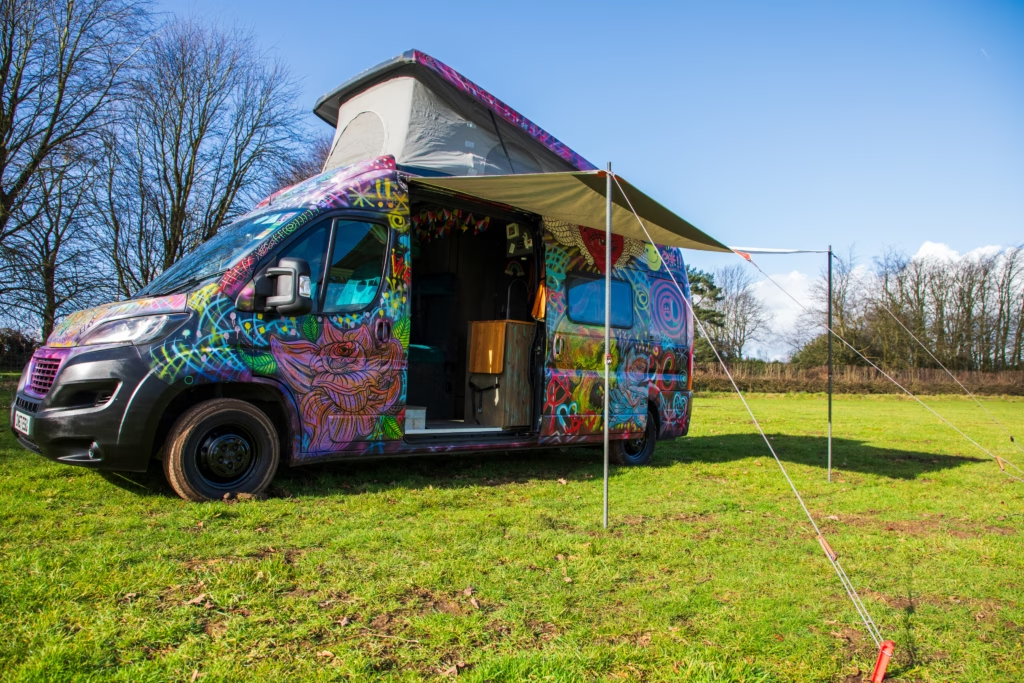
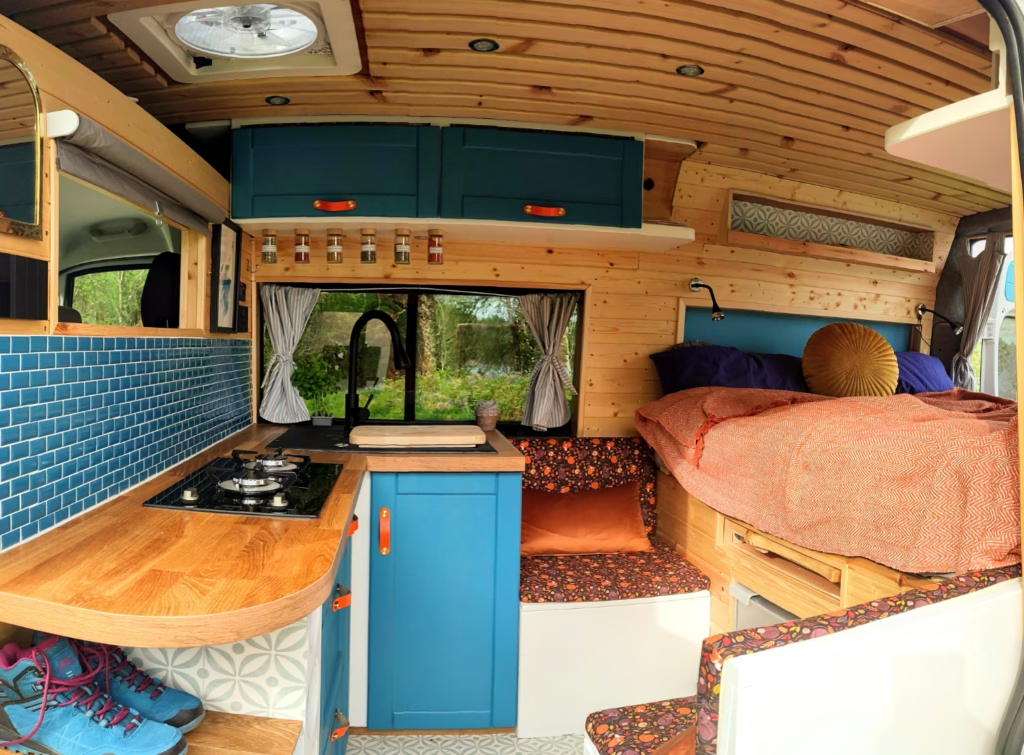
Get yourself a campervan. Seriously. It’s the perfect alternative to festival camping, and you’ll actually have somewhere comfortable to sleep.
If you need something last-minute for this weekend, there are options. But for 2026 planning, you’ve got time to find something perfect.
Where Could You Go?
Scotland’s calling. The NC500 route is absolutely brilliant in June. You could base yourself near Edinburgh or Glasgow and explore from there. Or grab a campervan from Newcastle and head north.
Wales is spectacular in summer. North Wales offers mountains and coast. South Wales has the Brecon Beacons and Pembrokeshire. Or check out the full Wales collection.
The Lake District needs no introduction. It’s busy in June, but find the right spots and it’s magical. Cumbria-based vans put you right in the heart of it.
Southwest England is classic British summer. Cornwall, Devon, Dorset, and Somerset are all brilliant for van life.
City breaks work too. Base yourself in London, Manchester, Birmingham, Bristol, Brighton, Liverpool, Sheffield, or Nottingham and explore urban culture.
Special Considerations for Your Trip
Going with family? Check out family-friendly options. Just you and a partner? Vans for two are perfect.
Got a dog? You’ll need pet-friendly campervan hire.
Want something special? Look at luxury campervans, vans with woodburners, or even electric campervans.
Fancy going properly off-grid? There are off-grid options and 4×4 campervans available.
Budget-conscious? Cheap campervan hire exists. Or look at long-term discounts if you’re planning a proper adventure.
You could even take it to Europe. June’s perfect for European road trips.
When Glastonbury Returns (2027)
Mark it in your diary now. Glastonbury Festival will be back in 2027.
And honestly? It’ll probably be even better for the break. The site will have recovered. The organisers will have fresh ideas. Everyone will be properly excited to return to Worthy Farm.
If you want to make Glastonbury 2027 happen in style, you know where to look for your wheels.
The Bottom Line
The 2026 fallow year isn’t a cancellation – it’s part of Glastonbury’s long-term sustainability. The festival’s been going since 1970, and these breaks are how it’ll keep going for decades more.
Meanwhile, you’ve got a brilliant opportunity to explore the UK (or beyond) in a completely different way. No mud. No portaloos. Just you, a campervan, and the open road. Browse the full collection of campervans and start planning your 2026 adventure now. Trust me, you won’t regret swapping festival camping for proper van life – even if it’s just for one year.
Related posts
Couldn’t get Glastonbury tickets? Or maybe you’re one of the thousands who’ve just realised 2026 is a fallow year. Either way, you need a …

Welcome to the world of campervan shows, where dreams are sparked, innovations discovered, and the vibrant vanlife community comes together in celebration of mobile …

So, you missed out on tickets to your favourite festival; maybe Glastonbury sold out before your Wi-Fi had even warmed up and Green Man …