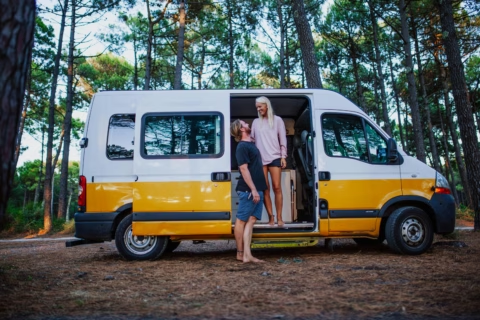
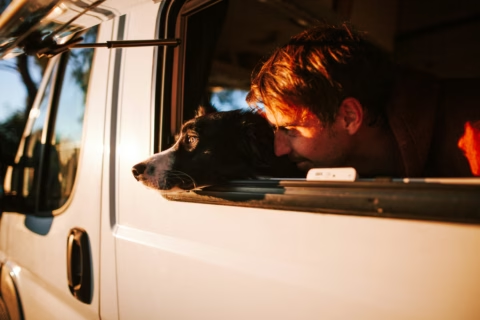

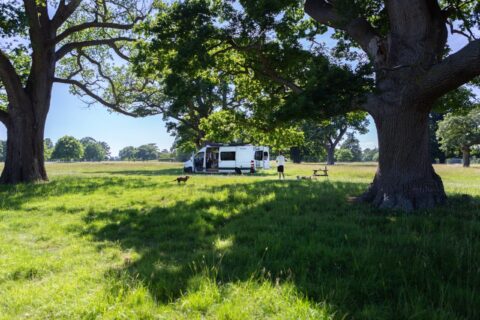
There’s a particular kind of joy in an off-grid campervan road trip. Open the door in the morning and you might find nothing outside but a very good view, with no shower block, electric hook-up or one reversing onto the pitch next door at 7am.
Just you, your van and, quite possibly, a sheep staring at your breakfast.
Going off-grid gives you a bit more freedom over where you stay and how you travel, but it doesn’t mean living on cold beans while watching your phone battery slowly die. With the right campervan and a little know-how, you can still cook dinner, keep the fridge cold, charge your phone, stay warm and make the all-important morning cuppa.
Fancy giving it a go? Browse our off-grid campervans and find a little home on wheels built for escaping the everyday.
What does off-grid campervanning actually mean?
In simple terms, going off-grid means using your campervan without relying on electric hook-up or full campsite facilities. Everything you need travels with you, with power coming from the leisure battery, solar panels or charging while you drive.
Fresh water is stored on board, cooking happens in the van and, depending on your camper, a toilet and shower might come along for the ride too. None of that means every night has to involve disappearing deep into the wilderness.
An off-grid trip could include a basic campsite, a farm stopover, a pub that welcomes campervans, a designated overnight spot or somewhere wonderfully remote. Having options is really the point.
Choose a campervan that’s happy off-grid
If you’re planning to spend a few days away from campsites, have a proper look at what’s inside the van before you book. A beautiful interior is lovely, but when you’re a long way from a plug socket, what’s hiding behind the cupboards starts to matter too.
Useful things to look for include:
- A leisure battery
- Solar panels
- A fresh-water tank
- A fridge
- Cooking facilities
- Heating
- A toilet
- A shower
- USB charging points
- A battery monitor
Not every trip needs every feature. A sunny weekend away for two can be fairly simple, while a family spending a week in Scotland in autumn might be much more interested in heating, water capacity and having a toilet on board.

How long can you stay off-grid in a campervan?
This is usually the big question and, slightly annoyingly, there isn’t one magic answer. How long you can stay off-grid depends on the van, the weather and how much power and water you use.
A couple travelling in summer with solar panels and a full water tank might manage several days quite happily. Add four people, daily showers, laptops and grey November skies and things can look rather different.
It can be more useful to ask what you’re likely to run out of first. Usually, that means one of four things:
- Fresh water
- Battery power
- Gas
- Toilet capacity
Food deserves an honourable mention too.
Especially biscuits.
Get to know your campervan’s power
You do not need to understand every cable hidden inside the van, but knowing the basics will make off-grid travel much easier. Most campervans have a leisure battery that powers the living area, which might include the lights, water pump, fridge, USB sockets and heating controls.
The starter battery is separate and has the rather important job of getting the engine going. Depending on the campervan, the leisure battery may recharge while you drive, through solar panels, through electric hook-up, or using a combination of the three.
When you collect the van, ask the owner to show you:
- How to check the battery level
- What charges it
- Which appliances use the most power
- What you can and can’t plug in
- What to do if the battery starts getting low
Five minutes asking questions at the start of the trip beats staring accusingly at a control panel later.
Solar panels help. A lot.
Solar can be brilliant for off-grid trips because it keeps putting energy back into the leisure battery while you’re parked. While you’re off walking, swimming or spending far too long choosing a pub, the van can be quietly getting on with things.
Of course, solar isn’t magic. How much power it produces depends on the size of the system, time of year, weather and where you’ve parked.
A sunny June road trip is one thing. A soggy February weekend is another.
Think of solar as something that can help you stay off-grid for longer, rather than an endless supply of electricity. For a more realistic look at what solar can do in a UK campervan, have a read of our guide to solar panels for campervans.

Be a bit sensible with your battery
Nobody wants to spend a holiday obsessing over battery percentages, and you shouldn’t need to. A little awareness goes a long way, though, because some electrical things are much greedier than others.
Charging a phone and using LED lights is one thing. Hairdryers, kettles, toasters and other high-powered appliances are quite another, so the easiest rule is to ask what the van is designed to handle.
If the owner tells you the giant hairdryer should stay at home, believe them.
Should the battery start getting low, cut back on anything you don’t need and move on when you’re ready. In many vans, driving helps recharge the leisure battery, so you get more power and a new view at the same time.
Water is usually the real off-grid challenge
Electricity gets most of the attention, but water tends to become much more interesting once you’re carrying your own supply. Drinking, cooking, washing up, cleaning your teeth and making tea all chip away at the tank surprisingly quickly.
Add a shower into the mix and it disappears even faster. Before heading somewhere remote, fill the fresh-water tank and find out roughly how much it holds.
For longer trips, knowing where you can refill along the way makes life much easier. There’s no need to start rationing cups of tea, because we’re not monsters, but turning the tap off while brushing your teeth and keeping showers short can make a noticeable difference.
Think about the toilet before you need it
Not every campervan has a toilet, and that’s not necessarily a problem. If you’re staying close to campsites, cafés and public facilities, you might barely need one.
Head somewhere remote for a few nights, however, and you may suddenly become very fond of it. If there is a toilet on board, find out how it works, roughly how long it lasts and where it can be emptied responsibly.
Best to do that at the start of the trip, rather than when it becomes urgent.
Keep food easy
Campervan food doesn’t need to be complicated. In fact, simple meals are usually much better when you’ve got limited space, water and enthusiasm for washing up.
Think pasta, curries, wraps, eggs, porridge, one-pot dinners and anything that doesn’t create half a sink’s worth of dirty pans. Stock up before long remote stretches and check what cooking kit is already included in the van before packing half your kitchen.
Plenty of Quirky Campers have surprisingly impressive little kitchens. A few even have ovens, which is excellent news if pastries count as an essential road trip supply in your book.

Where can you stay off-grid in a campervan?
Finding a beautiful place, parking up and waking up to a view you’d never get from a hotel room is one of the best bits of campervan travel. Going off-grid, however, doesn’t mean you can park anywhere you fancy for the night.
Local signage, parking restrictions and landowner permission all matter, and the rules vary depending on where you are. If a sign says no overnight parking, don’t stay overnight. If you’re on private land, get permission.
Apps and recommendations from other travellers can be handy for finding places to stop, but always pay attention to what’s actually happening when you arrive. A two-year-old recommendation does not beat a brand-new sign.
Most importantly, if you find somewhere beautiful, don’t be the reason campervans get banned from it. For more on finding places to stay and doing it responsibly, have a read of our 8 wild camping tips.
Five things first-time off-grid campers underestimate
1. How quickly water disappears
A full tank can look enormous at the start of a trip. One dinner, a round of washing up, a few toothbrushes and four cups of tea later, it suddenly looks rather less enormous.
Keep half an eye on it and top up when you get the chance.
2. How chilly evenings can get
Lovely summer days can still turn cool once the sun goes down, particularly if you’re somewhere exposed. Make sure you know how the heating works before bedtime.
Trying to figure it out at midnight while wearing every jumper you brought is less fun.
3. How patchy phone signal can be
Sometimes having absolutely no signal is exactly what you came for. It becomes slightly less charming when the map to tomorrow’s stop is also somewhere in the cloud.
Download maps and anything important before heading somewhere remote.
4. How much power some appliances use
Tiny lights and phone chargers are rarely the issue. That enormous electrical thing you brought from home might be.
Check before plugging things in and you’ll save yourself a lot of faffing.
5. How little you actually need to plan
Leave some gaps in the itinerary. You might find somewhere lovely and stay another night, someone might tell you about a beach you’ve never heard of, or the weather might completely ignore the plans you made at home.
That’s part of the fun.
Your off-grid campervan checklist
Before heading somewhere remote, give these a quick check:
- Fresh-water tank filled
- Leisure battery charged
- Gas checked, if applicable
- Fridge stocked
- Easy meals packed
- Offline maps downloaded
- Overnight stop checked
- Next water refill roughly planned
- Toilet empty
- Heating controls understood
- Torch or headtorch packed
- Warm layers packed
- Phones and power banks charged
- Rubbish bags handy
- Emergency snacks secured
When it’s time to move on, take your rubbish with you, dispose of toilet waste and grey water responsibly, avoid blocking roads or access points, and keep noise down. Respect local residents, wildlife and any signage, then leave the place looking as lovely as it did when you arrived.
You don’t have to spend every night off-grid
Going off-grid is not a competition. A really good road trip might involve two nights somewhere remote, followed by a campsite where you refill the water, empty waste, charge everything and enjoy a gloriously long shower.
After that, head off again.
The whole point is having more freedom, not creating rules for yourself about how long you can avoid a plug socket.
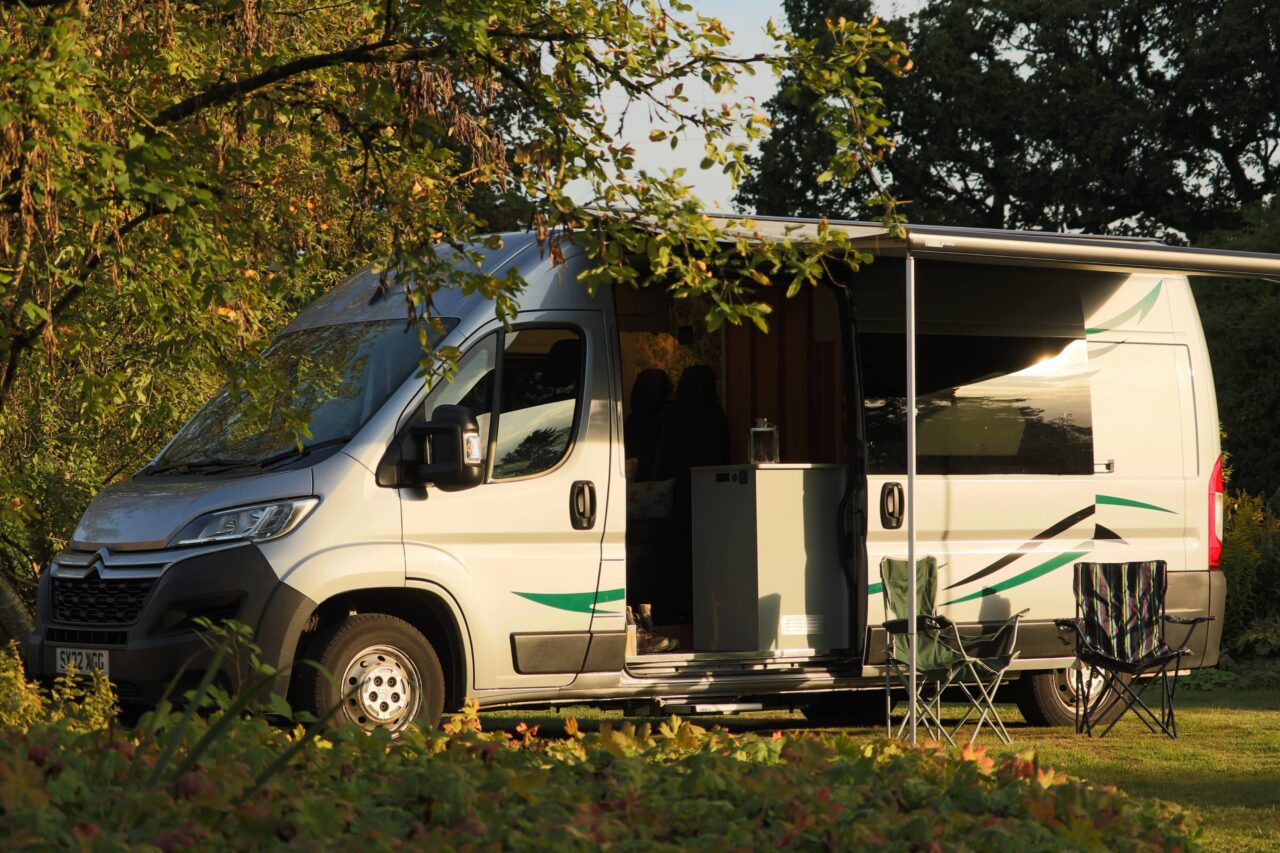
Ready to go off-grid?
Your first off-grid road trip doesn’t need to be epic. Start with a night or two, choose a campervan that has what you need and learn how quickly you use water, how the battery behaves and which bits of off-grid life matter most to you.
Maybe a shower on board turns out to be non-negotiable. Perhaps you discover you couldn’t care less about showers but are suddenly extremely passionate about solar panels.
Everyone travels differently, and that’s rather the point.
Choose somewhere lovely, pack something tasty and leave a little room for changing the plan.
Ready to find your little home on wheels? Explore our off-grid campervans and start plotting your escape.
FAQs
An off-grid campervan can operate without electric hook-up or full campsite facilities, using its own battery, water supply and onboard equipment.
It depends on your battery, water, gas use and the weather. Many well-equipped campervans can manage a few days off-grid comfortably.
Not always, but solar panels can help recharge your leisure battery and make it easier to stay off-grid for longer.
Rules vary across the UK, so always check local restrictions, signage and landowner permission before staying overnight.
Useful essentials include a charged leisure battery, fresh water, food, heating, offline maps and a plan for waste disposal.