



Taking a campervan to Europe is one of those holidays that feels like a proper adventure before you’ve even left the driveway.
Roll off the ferry in France, wake up beside a lake in Switzerland, wander through a German market town and find yourself eating pizza in Italy a few days later. All with your bed, kitchen and favourite mug travelling along behind you.
And while taking a campervan from the UK to Europe does require a little more preparation than a road trip closer to home, it doesn’t need to be complicated. Get the paperwork sorted, check the rules for the countries on your route and you’re ready to go.
Here’s what you need to know before pointing your campervan towards the Continent.
Why travel around Europe in a campervan?
Freedom. That’s the big one.
Travelling by campervan means you can move at your own pace rather than hopping between airports, hotels and rigid check-in times. Stay an extra night when you find somewhere wonderful. Change direction when the weather looks better elsewhere. Stop for lunch purely because the view demands it.
It can work brilliantly for couples, families, solo travellers and anyone bringing a four-legged passenger along for the ride.
You’ve also got your own kitchen and living space with you, which makes it much easier to mix restaurant meals with supermarket picnics and dinners cooked beside the van.
Need a little inspiration before you start plotting pins on the map? Take a look at our favourite European road trips from the UK.
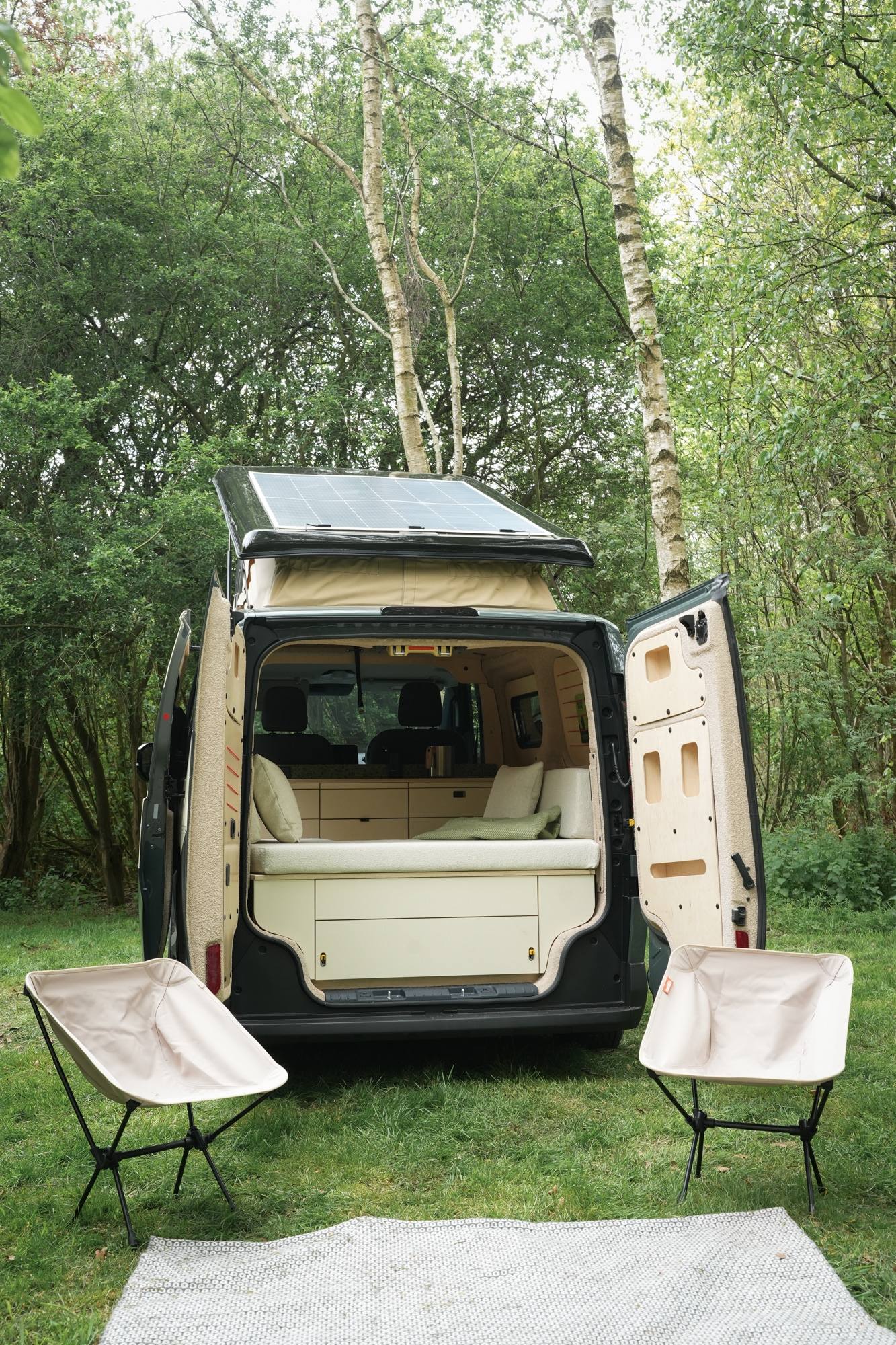
Can you take a campervan from the UK to Europe?
Absolutely.
If you’re taking your own campervan, you’ll need to make sure your vehicle insurance and breakdown cover are valid in every country you plan to visit.
If you’re hiring a campervan, check that the vehicle is approved for European travel before booking. With Quirky Campers, you can filter for EU-friendly vans, but you’ll still need to let the owner know you’re travelling abroad so the correct paperwork can be arranged.
And one small but important distinction: Europe, the European Union and the Schengen Area aren’t the same thing.
That matters because entry rules, driving requirements and insurance can vary depending on your route.
How long can UK travellers stay in Europe?
British tourists can generally visit countries in the Schengen Area for up to 90 days in any rolling 180-day period without a visa.
The important bit is that those 90 days apply across the Schengen Area as a whole, not 90 days per country. Ireland is outside Schengen, while Cyprus currently operates its own separate short-stay arrangements.
Planning the six-month road trip of dreams? Lovely. Just make sure you look into the appropriate visa or residency requirements first.
EES and ETIAS: what UK travellers need to know
There are two European border systems worth knowing about in 2026.
The Entry/Exit System (EES) is now fully operational. It digitally records short-stay travellers entering and leaving the countries using the system. On your first crossing, this can involve having your photograph and fingerprints taken, so allow a little extra time at the border and follow the instructions from your ferry or LeShuttle operator.
Then there’s ETIAS, the upcoming European travel authorisation.
As of August 2026, ETIAS has not launched and travellers do not need to apply for one yet. The EU says it is due to begin operating in the last quarter of 2026, with the exact launch date to be announced separately.
So if a website is currently trying to sell you an ETIAS for an imminent trip, keep your wallet firmly closed.
What documents do you need to take a campervan to Europe?
The paperwork is slightly different depending on whether you own or hire the van.
If you’re hiring a campervan
You’ll generally need:
- A valid driving licence
- Your passport
- A VE103 Vehicle on Hire Certificate
- Valid European vehicle insurance
- European breakdown cover
- Travel insurance
- Any driving equipment required by the countries you’re visiting
- The correct paperwork for any pets travelling with you
The VE103 is particularly important. It proves you have permission to take a hired or leased UK vehicle abroad.
For eligible Quirky Campers, European insurance and breakdown cover are included in the booking cost. You’ll usually also need to add an EU Travel Pack, which covers the required vehicle-on-hire documentation and European travel kit. This currently costs around £45, although it can vary slightly between campervans.
If you’re taking your own campervan
Take:
- A valid driving licence
- Your passport
- Your V5C log book
- Your vehicle insurance documents
- Suitable European breakdown cover
- Travel insurance
- Any required driving equipment
- Pet documentation, if needed
Your V5C needs to show your current UK address, and your UK-registered vehicle must remain taxed, insured and MOT’d while you’re travelling abroad for less than 12 months.

Do you need a Green Card to drive in Europe?
Usually, no.
You do not currently need to carry an insurance Green Card when driving in the EU, Ireland, Andorra, Bosnia and Herzegovina, Iceland, Liechtenstein, Montenegro, Norway, Serbia or Switzerland.
You do still need valid vehicle insurance, and it’s worth checking your level of cover before travelling. Minimum third-party cover abroad doesn’t necessarily mean you have the same protection you enjoy at home. EU friendly Quirky Camper bookings will include EU friendly insurance cover, one less thing for you to worry about.
Countries elsewhere in Europe can have different requirements, so check if you’re heading beyond the usual EU road-trip routes.
Do you need a UK sticker on your campervan?
That depends on your number plate.
If it already displays UK alongside the Union flag, you generally don’t need a separate UK sticker.
You will need a UK sticker if your plate displays a GB identifier, an EU symbol, an England, Scotland or Wales flag, or has no national identifier.
And remember this one if you’re chasing sunshine: Spain, Cyprus and Malta require a UK sticker regardless of what appears on your number plate.
You don’t need one when driving in Ireland.
What should be in your European driving kit?
There isn’t one universal “EU travel kit” that is legally required in exactly the same form everywhere.
The rules vary from country to country.
Depending on your route, you may need equipment including:
- Warning triangles
- High-visibility jackets
- First-aid kit
- Headlight converters
- Spare bulbs
- UK sticker
- Winter tyres or snow chains
France, for example, requires a warning triangle and reflective vest in cars, while winter equipment rules apply in certain mountainous areas during winter.
Check the official driving rules for every country you’re travelling through, not just your final destination. Your beautifully planned Italian adventure still counts as driving in France if that’s how you’re getting there.
Taking your dog to Europe in a campervan
Road trip companion? Excellent choice.
Pet travel rules changed again in April 2026, so this is one area where older blogs and forum posts can very quickly lead you astray.
Great Britain residents travelling with a dog, cat or ferret to an EU country should arrange an Animal Health Certificate (AHC) for their trip. EU pet passports previously issued to GB residents may no longer be valid for entry into the EU.
Your pet will also need to meet requirements around microchipping and rabies vaccination, and dogs travelling to certain destinations may need tapeworm treatment.
The AHC must be issued before you enter the EU and can be used for entry within 10 days of issue. Once you’ve entered, it can remain valid for onward EU travel and re-entry to Great Britain for up to six months, providing the relevant requirements continue to be met. You’ll need a new AHC for each new trip from Great Britain.
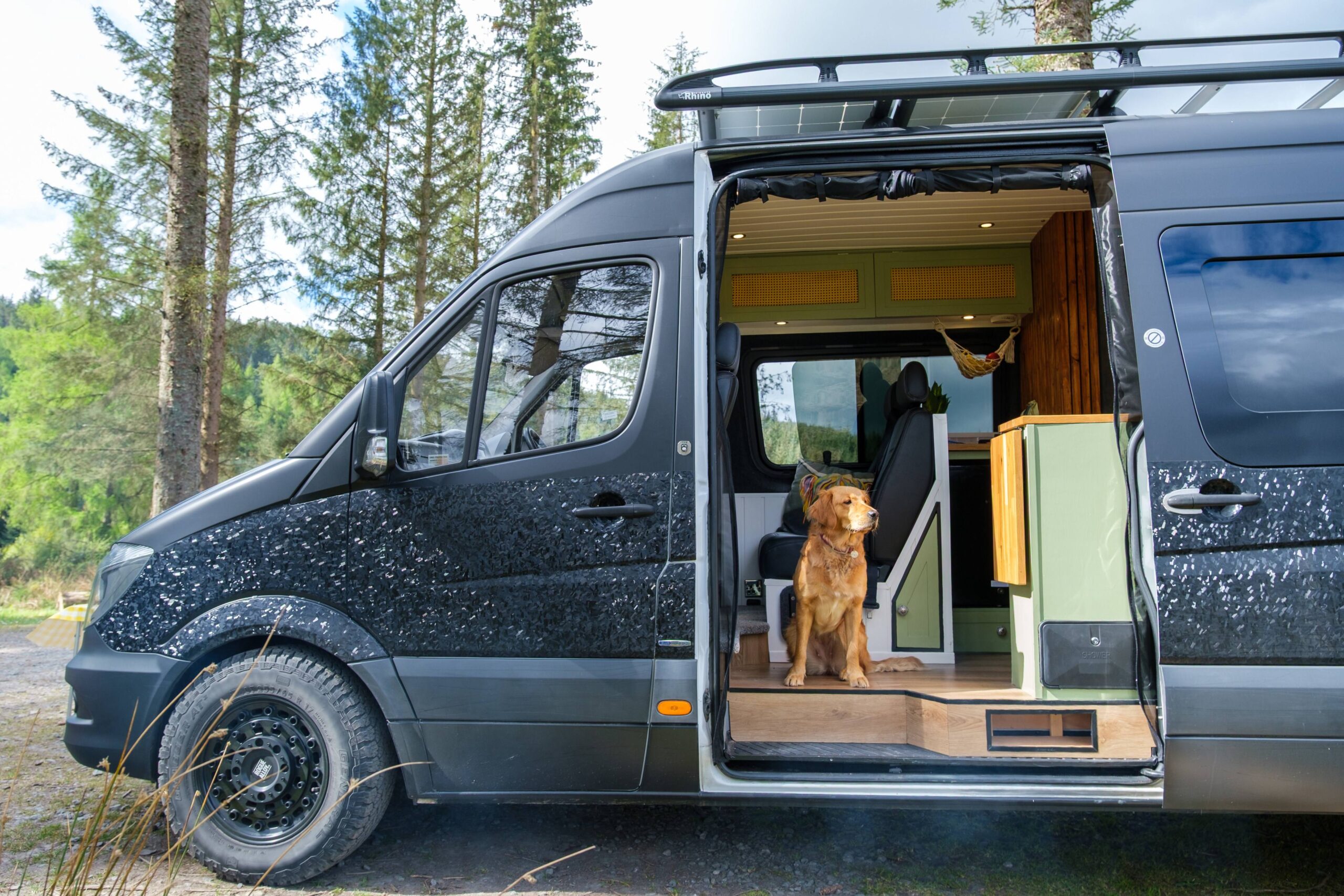
And, of course, make sure the campervan welcomes your furry co-pilot too. You can explore our dog-friendly campervans before you book.
Driving a campervan in Europe
The first few kilometres on the other side of the Channel can feel a little strange. Soon enough, driving on the right becomes second nature, although roundabouts deserve your full concentration until your brain catches up.
A few things to remember:
Know your campervan’s dimensions
Write down the height, width and length of your campervan, including roof vents, solar panels, bike racks and anything else sticking out.
A charming little French car park becomes significantly less charming when its height barrier meets your roof.
Watch your speed
European speed limits are usually displayed in kilometres per hour, and limits can change according to road type, weather conditions and vehicle weight.
Follow local signs rather than assuming the rules are the same as at home.
Check low-emission zones
Many European cities now operate low-emission or restricted traffic zones.
France uses Crit’Air emissions stickers in designated areas, while other countries and cities have their own systems.
Research any cities on your route before driving into the centre. A little planning is much more fun than a surprise fine.
Don’t assume every toll works the same way
European road charging is a glorious patchwork of toll booths, electronic systems, motorway vignettes and local charges.
Check your route beforehand so you know what you need to buy or pay for. There is no universal rule that lets you simply pay every European road toll afterwards.
How much does a campervan trip around Europe cost?
How long is the road?
Your budget will depend on where you go, how far you drive and whether your idea of dinner is pasta cooked beside the van or pasta served beneath a chandelier.
Your main costs are likely to include:
- Campervan hire
- Fuel
- Ferry or LeShuttle crossings
- Road tolls and vignettes
- Campsites and stopovers
- Parking
- Low-emission-zone charges
- Food and drink
- Travel insurance
- Any European travel extras for your campervan
Slow travel is one of the easiest ways to keep costs under control. Drive less, stay longer and actually enjoy the places you’ve travelled all that way to see.
Cooking some meals in your camper, shopping in local supermarkets and booking Channel crossings ahead can help too.
Where can you stay overnight in a campervan in Europe?
There’s no single set of camping rules across Europe, so this is another area where a bit of homework pays off.
Campsites
The easiest option.
You’ll find everything from simple rural campsites to enormous holiday parks with restaurants, pools, laundry rooms and enough entertainment to keep children occupied for approximately seven glorious minutes.
If you need electric hook-up, showers or waste facilities, campsites give you the most predictable option.
Popular sites can book up during summer and school holidays, so reserve ahead if there’s somewhere you particularly want to stay.
Aires and motorhome stopovers
France is famous for its network of aires, with similar designated campervan and motorhome stopovers found across many other European countries.
Some are free, others charge a small fee, and facilities can range from absolutely nothing to water, waste disposal and electric hook-up.
Always check the individual stop before arriving, particularly if you’re travelling in a larger campervan.
Wild and free camping
Having your bed with you unfortunately doesn’t mean you can sleep anywhere you can squeeze the van.
Rules around overnight parking and wild camping vary between countries, regions and individual towns. In some places, parking may be permitted but sleeping or setting up camp is not.
Check local signs and regulations, park considerately and leave absolutely nothing behind.
Apps such as Park4Night and Searchforsites can be useful for finding possible overnight spots, but local rules always trump somebody’s review from three summers ago.
Ready to point your campervan towards Europe?
Ready to point your campervan towards Europe?
Croissants for breakfast. Mountains by lunchtime. A tiny beach you hadn’t planned on finding by sunset.
That’s the beauty of travelling Europe by campervan: you bring the home, then decide where to put it.
Browse our EU-friendly campervans and find the four-wheeled home for your next European adventure.
FAQs
Yes, providing the campervan allows European travel. You’ll need the correct insurance, breakdown cover and a VE103 Vehicle on Hire Certificate. Quirky Camper owners will provide this for you so just let them know where you are heading.
UK tourists can generally spend up to 90 days in any rolling 180-day period across the Schengen Area.
Most people with a UK photocard licence do not need an IDP for short visits to EU countries, Switzerland, Norway, Iceland or Liechtenstein, but always check the requirements for your route.
No. Overnight parking and wild camping rules vary considerably by country and region, so always check local regulations and signs.
Yes. For trips from Great Britain to the EU, you’ll need to follow the current pet travel rules, including arranging the correct Animal Health Certificate and meeting vaccination and microchip requirements.