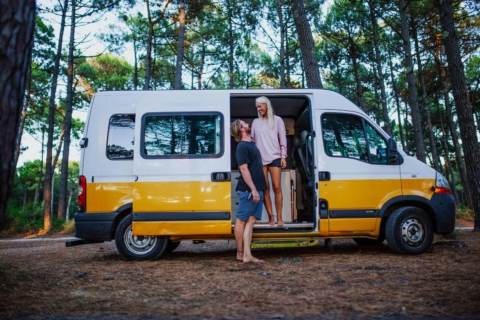


Two very different things get called “campervans” in the UK. On one side you’ve got factory-built motorhomes: Autotrail, Bailey, Swift, Bürstner, Adria. Finished in a factory, sold through dealers, built to a standardised spec. On the other, bespoke converted vans: usually a panel van like a Transit, Sprinter or Crafter that’s been turned into a camper by a professional converter or a capable owner.
Buyers get told both are basically the same thing. They’re not. The experience of owning each, the costs, the resale behaviour and the way they feel to live in are all different. Here’s what actually separates them and which one suits which kind of buyer.
Build quality: where each approach wins
Factory motorhomes are built to a price point. That sounds harsh but it’s how the business model works. A manufacturer building several thousand units a year standardises everything: the furniture panels, the wiring looms, the window fittings, the upholstery. This keeps costs down and makes warranty claims manageable, but it also means the materials used are often lightweight and sometimes fragile. Thin ply cabinets, clip-together trim, panel gaps. If you’ve ever poked around a five-year-old Autotrail and wondered why a cupboard door feels loose, this is why.
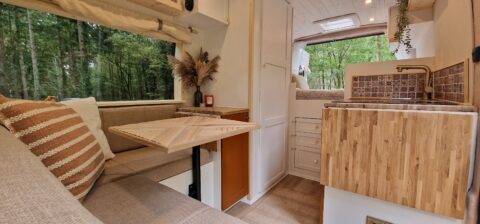
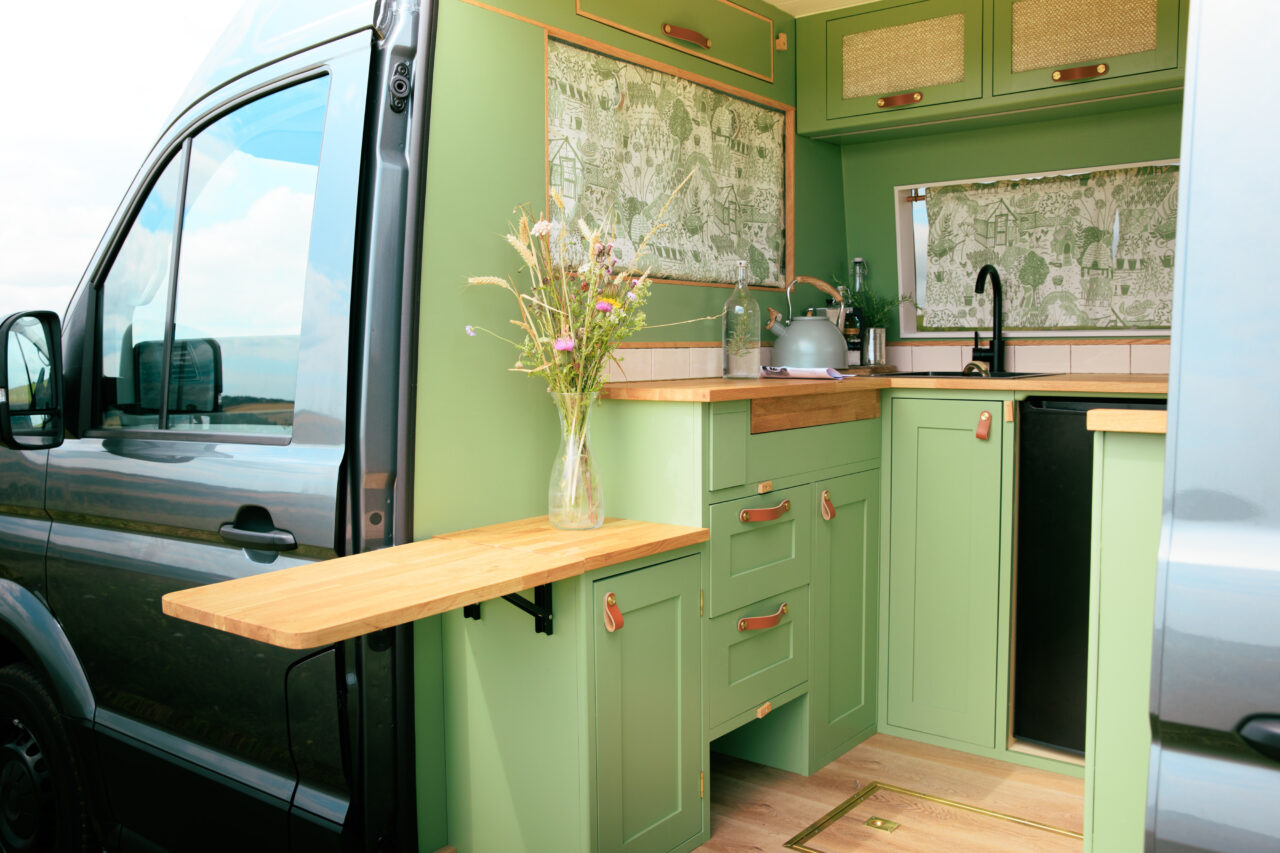
A good bespoke conversion is usually built from heavier, more honest materials. Real hardwood trim, properly bonded insulation, cabinetry screwed and glued rather than stapled. The converter is building one van at a time and has no cost pressure to shave grams. The downside is inconsistency. Converters vary enormously in skill, and a bad conversion is genuinely worse than a bad factory build because there’s no quality control behind it.
The rule we go by: a good professional conversion beats a mid-range factory motorhome on build quality almost every time. A poor self-build loses to a factory motorhome on build quality almost every time. The key word is “good”.
Character and customisation
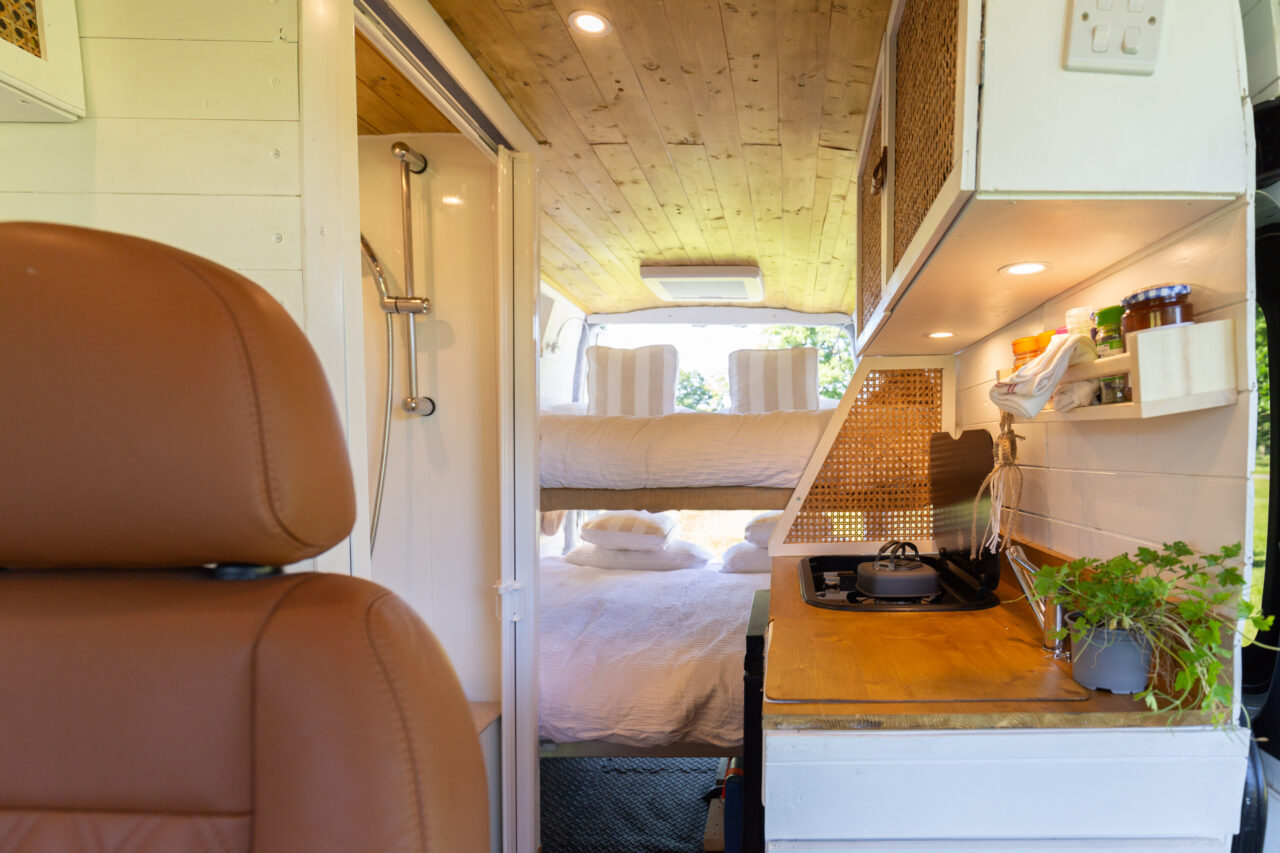
This is where bespoke vans pull ahead decisively. Every conversion is one of one. The layout suits the original owner’s life, the finishes reflect their taste, and the quirks (good and bad) are theirs. You can walk around the Quirky Campers marketplace for twenty minutes and see reclaimed oak worktops, hand-built bunk beds, custom upholstery in fabrics you’d never find on a dealer lot and layouts that no factory would ever build because they don’t suit the average buyer.
Factory motorhomes are designed to appeal to as many people as possible. That means beige. A lot of beige. And layouts optimised for the showroom rather than your actual life. If character matters to you, there’s no contest.
Warranty and peace of mind
Factory motorhomes come with a manufacturer warranty, usually two to three years on the habitation side and a separate warranty on the base vehicle. Dealers handle warranty work, and there’s a network of approved service centres. If something breaks, you know who to call.
Bespoke conversions rarely come with any habitation warranty once they’re on the used market. You’re buying as-seen from a private seller, which means your protection is whatever you can verify before you hand over the money. This is the strongest argument for factory builds if you’re risk-averse and don’t want to become your own maintenance department. Our pre-purchase checklist is designed to reduce that risk by catching the obvious problems before you commit.
Finance: why factory builds have the edge
This is a practical point that catches a lot of buyers out. Most mainstream finance lenders are comfortable lending against factory motorhomes from known manufacturers. The vehicles have established resale values, standardised specifications and a clear secondary market. A bespoke conversion, especially a self-build, is harder to finance through mainstream lenders because valuing the vehicle is subjective.
You can still finance a conversion, but you’ll usually need a specialist lender, a larger deposit, or a personal loan secured on something other than the van itself. If financing is central to your purchase, check what’s actually available for each type before you fall in love with a specific van.
Resale and depreciation
Factory motorhomes depreciate predictably. The first three years are the steepest, then it flattens out. You can look up guide prices, compare dealer stock, and form a realistic expectation of what your van will be worth in five years.
Bespoke conversions behave differently. A well-built conversion from a reputable converter often holds its value much better than a factory equivalent, because demand for quality conversions consistently outstrips supply. A poorly-built conversion depreciates faster because resale buyers can spot the problems. The spread is huge. We’ve seen professionally converted Sprinters sell for more than their original build cost after five years of use. We’ve also seen DIY conversions lose 60% of their value in two years because the buyer knew the electrics needed ripping out.
Conversion quality is the single biggest factor in used value. If you’re buying with half an eye on selling later, buy quality or don’t buy.
Day-to-day living: which feels better?
Factory motorhomes tend to feel bigger because designers optimise floor plans mathematically. They fit more kit into a given footprint because that’s what sells in showrooms. You’ll often get a bigger fridge, a proper bathroom and a dedicated wardrobe in a factory build that a similar-sized conversion would struggle to match.
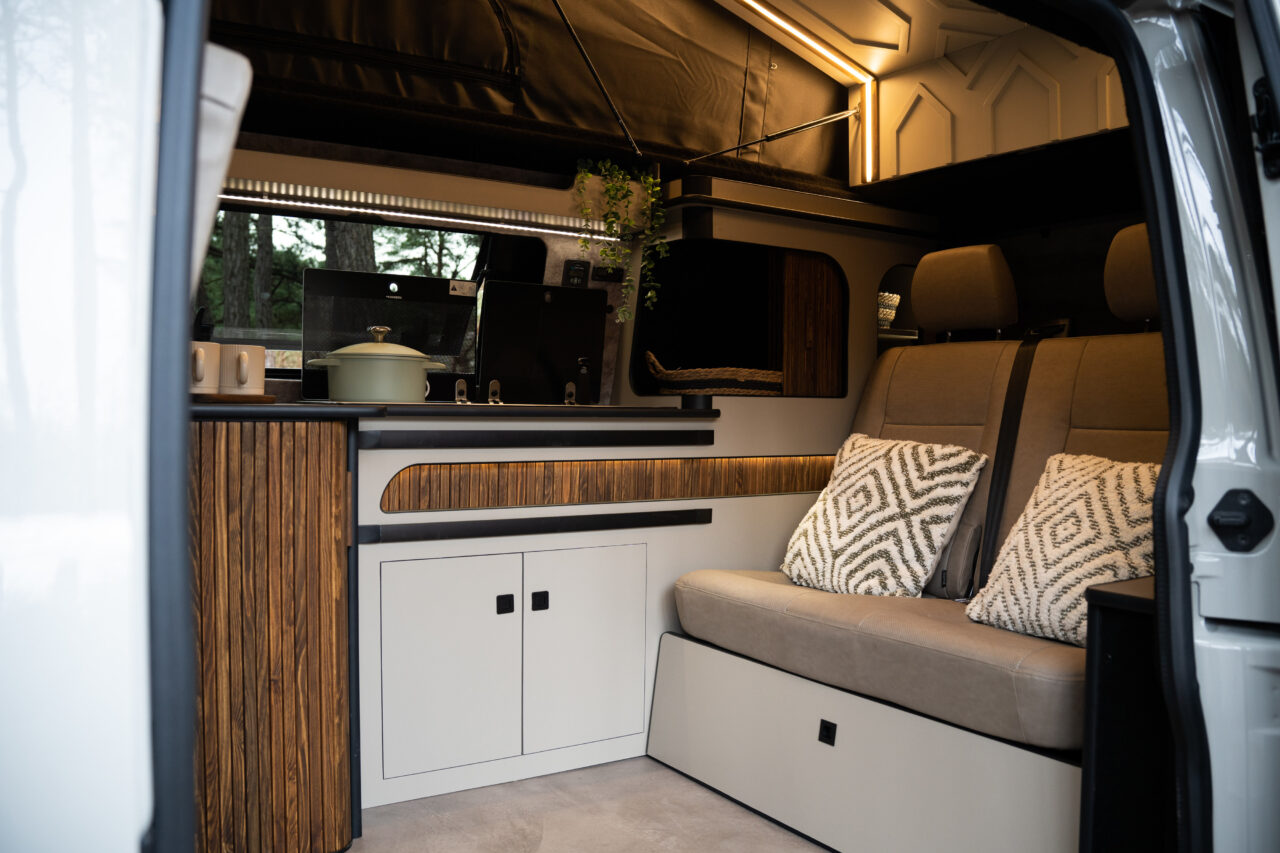
Conversions feel more like a home. Less stuff, but the stuff that’s there is usually better. Nicer worktops, nicer seating, nicer light. A bespoke conversion will often lose on a spec sheet comparison with a factory motorhome of the same length and win on the feeling of actually being inside it. Which matters more depends on you.
Who should buy which?
Buy a factory motorhome if you want a predictable ownership experience, you care about finance and warranty, you’re planning to upgrade every three to five years, and you want maximum fitted kit for your money. Autotrail, Bailey and Swift are reasonable starting points in the UK market.
Buy a bespoke conversion if you care more about build quality and character than fitted kit, you’re comfortable doing basic maintenance yourself, and you want a van that actually reflects how you travel. If you want the middle ground (a professionally built conversion with the quality of bespoke and the peace of mind of a proper build), that’s the sweet spot the Quirky Campers marketplace specialises in: privately owned conversions, hand-picked for craftsmanship.
The honest summary: factory motorhomes are the sensible choice. Bespoke conversions are the better one if you’re willing to put the work in to find a good example. Browse the current listings and compare what a quality conversion offers against the factory motorhomes on the market at the same price. The difference is usually obvious within ten minutes of looking.