



Most people start their campervan search dreaming of space, then realise the biggest van is not the one they actually want to drive, park or pay to run. Size is the decision that shapes every other one, and the right answer depends entirely on how you travel.
A bigger van gives you room to live. A smaller one gives you a van you will use without a second thought. Here is how to work out which side of that trade you fall on. For how the space inside is arranged once you have settled on a size, our guide to campervan layouts picks up where this one stops.
What a smaller van gives you
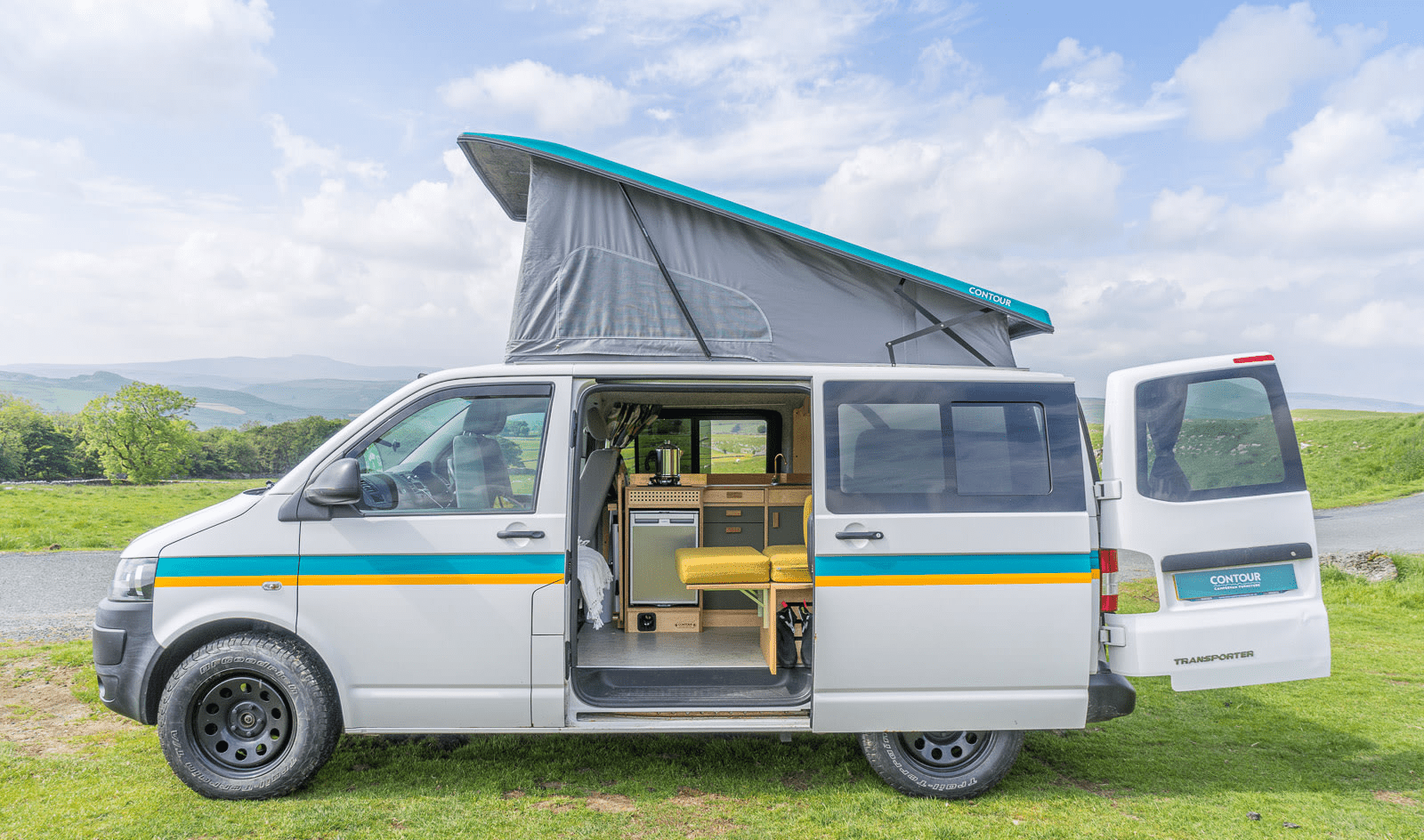
A compact campervan, such as a VW Transporter or a short-wheelbase conversion, drives much like a large car. It fits a normal parking bay, clears most height barriers, and works as everyday transport as well as a holiday van. It costs less to fuel, is cheaper to run, and is more likely to meet clean air zone standards. The trade is space: limited standing room, a smaller kitchen, and usually a bed you make up each night rather than a fixed one.
What a larger van gives you
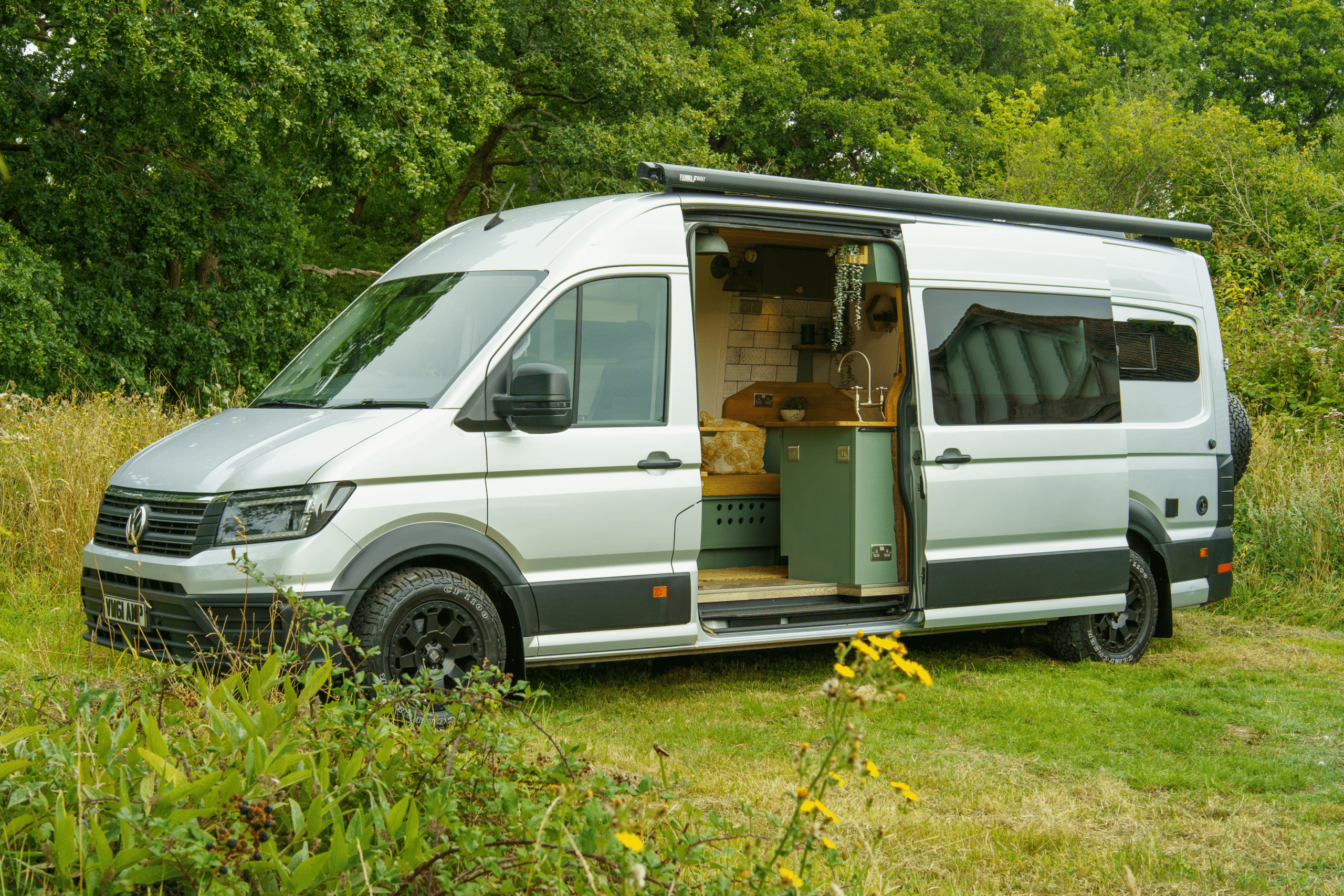
A long-wheelbase or high-top van, or a coachbuilt, gives you proper living space: a fixed bed, a real kitchen, often a washroom, and room to sit out a wet afternoon without climbing over each other. For longer trips, for families, or for anyone planning to live in it for weeks at a time, that space changes the whole experience. The cost is a van that is harder to park, will not fit some height barriers or a home garage, uses more fuel, and feels like an event every time you make a short local trip.
Wheelbase and roof: the size choices
Two measurements decide how big a van really is to live with: its length, set by the wheelbase, and its height. Short, medium and long wheelbase versions of the same model can feel like different vehicles inside. Roof height is the other half of it. A pop-top elevating roof keeps the van low for barriers and home garages, then lifts for standing room and often an extra bed, while a fixed high-top gives full standing room and better insulation all the time but adds permanent height. A short-wheelbase pop-top is the easiest to live with day to day; a long-wheelbase high-top is the most comfortable to live in. Most buyers are choosing somewhere along that line.
Parking, access and city driving
If you will drive into towns and cities, size and height decide where you can go. A lot of multi-storey and supermarket car parks have height barriers around two metres, which a high-top will not clear but a pop-top usually will. A smaller van slips into a normal bay, while a long van hangs out of one and is harder to turn and reverse. A Euro 6 diesel van of either size will usually meet clean air zone rules, but the smaller van is the one you will happily take into a city in the first place.
The daily reality, not the holiday fantasy
The honest question is what the van does between trips. If it doubles as your everyday vehicle, or lives on a tight driveway, a smaller van wins because you will actually use it. If it is a dedicated tourer that comes out for long trips and lives on a drive or a storage site, the extra size earns its keep. Be realistic about the narrow lanes and small car parks at the places you really visit, because the best spots often have the tightest access.
Driving, weight and running costs
Most campervans of either size sit under the 3,500kg mark that a standard car licence covers, but the bigger and heavier the van, the more you feel it on a long drive and at the fuel pump. A larger van costs more to fuel, can cost more to insure, and a motor caravan with an unladen weight over 3.05 tonnes even has lower national speed limits than a car. Weigh the ongoing running costs of a bigger van against how often you will really use the extra space.
Try a size before you commit
If you are genuinely torn, the cheapest way to decide is to spend time in each. You can hire either size on separate trips: a weekend in a compact van will quickly tell you whether the lack of standing room bothers you, and a few days in a large one will show whether the extra space is worth the effort of parking it. Hiring before you buy costs far less than buying the wrong size and selling at a loss a year later. Use it to test how you actually live in a van, not how you picture it in your head.
So, which should you buy?
If you travel mostly as one or two, take weekends and the odd longer trip, and want a van you will use all year, go smaller. If you travel as a family, or as a couple who likes room to spread out, take long trips, and have somewhere to keep a big van, go larger. In our experience most people end up happier one size down from their first instinct, because the van they use is worth more than the van they admire on the drive.
Have a look through the campervans for sale with your honest use in mind, and filter by size and berths so the van matches the trips you will really take.