


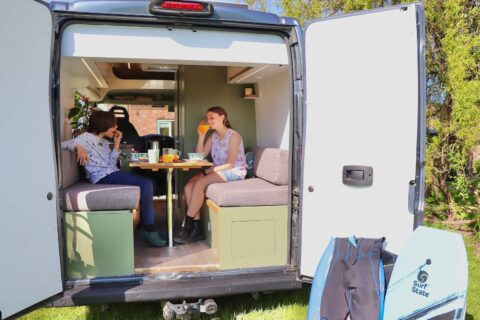
You’ve found the campervan, agreed the sale and chosen a collection day. Before anyone drives it home, the right insurance needs to be active. Quirky Campers’ insurance guide confirms that at least third-party cover is a legal requirement for driving a campervan on UK roads.
This is not another general guide to every type of campervan policy. Our ultimate guide to campervan insurance covers the wider options, costs and owner requirements. This buyer-focused checklist explains what to gather, what to tell the insurer and what to confirm before you collect a converted campervan.
Start the quote before collection day
Insurers need details about both the driver and the campervan. Starting the conversation early gives you time to obtain missing information from the seller and check that the policy reflects the vehicle you are actually buying.
Have the following ready:
- Your details and the details of every named driver, including driving history and any claims or points.
- The campervan’s registration, make, model, age, fuel type, current value and expected annual mileage.
- Where it will usually be kept and what security features are fitted.
- How you plan to use it, such as leisure trips, commuting, business travel or European touring.
- Who completed the conversion, whether it was professional or self-built, and what has been fitted or changed.
- Whether you may eventually rent out your campervan. Self-drive hire requires different cover, so mention this at the quote stage rather than assuming a standard leisure policy will include it.
Ask the seller for the conversion records
A converted campervan is more than its registration number. The paperwork helps you understand the vehicle and gives the insurer evidence about the build. Quirky Campers’ campervan buying guide recommends checking the documents yourself before completing a purchase.
Ask what is available and keep copies of the relevant records:
- V5C logbook details, with the registration and VIN checked against the vehicle.
- MOT information and service history.
- Conversion invoices, receipts and build photographs.
- Manuals and warranties for fitted equipment.
- Relevant gas or electrical sign-offs and any habitation information.
- Weighbridge information, where available.
Quirky Campers does not inspect sales listings or vehicles in person. Sellers are asked to provide evidence of certificates and paperwork where possible, but buyers must confirm that the information is present and correct themselves.

Describe the conversion accurately
Campervan conversion insurance depends on an accurate description of the finished vehicle. Tell the insurer about the conversion and all relevant modifications, including items such as roof or window changes, fixed furniture, cooking facilities, solar panels, heaters and towbars.
Do not assume a standard car or van policy will automatically cover the completed conversion. Quirky Campers’ insurance guide notes that not every provider covers converted or self-built campervans and that insurers may ask for photographs and details of who completed the work. Ask the provider to confirm that the finished conversion is covered under the policy you are considering.
A self-build can be insured, but the insurer may want more information about what was fitted and who fitted it. Build photographs, conversion receipts and relevant sign-offs can make those questions easier to answer. If the van has gas, our gas sign-off guide explains the checks Quirky Campers recommends for self-build conversions.
Treat the V5C as one detail, not the whole answer
Do not assume the wording on the V5C settles the insurance question. Our campervan valuation guide explains that the V5C body-type entry does not itself change the insurance category, while Quirky Campers’ insurance guide notes that insurers vary in the evidence they request.
Give the insurer the exact body type shown on the V5C alongside a full description of the conversion. Insurers set their own terms and evidence requirements, so ask the provider to confirm what it will accept before you buy the policy.
Check what the policy actually covers
The level of cover is only the starting point. Campervan insurance is generally offered as third-party only, third-party, fire and theft or comprehensive cover, but the inclusions can still differ between policies.
Before accepting a quote, check:
- Whether the completed conversion is covered.
- Whether personal belongings are included and what limits apply.
- Whether breakdown assistance and European travel are included or optional.
- Whether every intended driver and use is covered.
- Whether hiring the campervan to other people would require separate self-drive hire insurance.
Check the policy details rather than assuming a feature is included because the insurance is described as specialist campervan cover.
What about temporary insurance?
Quirky Campers’ insurance guide notes that short-term campervan insurance is available. If you are considering it for collection, ask the provider to confirm that the specific driver, vehicle, conversion and journey are covered before relying on it. Do not assume that a temporary policy has the same terms as annual cover.

Your collection-day insurance checklist
Before the keys change hands, confirm that:
- The cover is active before anyone drives the campervan.
- The registration and vehicle description on the insurance documents are correct.
- The insurer has been told about the conversion, modifications, intended use, storage and security.
- Every person who may drive home is covered.
- Any evidence requested by the insurer has been supplied.
- You have collected the V5C details, sale receipt, available conversion paperwork, manuals and keys from the seller.
If the cover is not active or the insurer has not confirmed an important detail, do not drive the campervan away. Resolve the question first or arrange another way to move it.
Once the insurance and paperwork are sorted, collection day can be about learning the controls, finding the cup holders and planning the first trip. If you are still searching, browse Quirky Campers’ campervans for sale and use this checklist before bringing your chosen van home.
Hire before you buy
If you are still deciding whether campervan ownership is right for you, hiring first can help you test different layouts, bed setups and driving styles before committing to a purchase. It is a practical way to learn which features genuinely matter to you when you are on the road.
When you hire through Quirky Campers, specialist comprehensive campervan hirer’s insurance and breakdown cover are included in the booking price. Each driver must still meet the individual campervan’s insurance criteria and provide the required documents before the trip. Once those requirements are met, the cover is arranged before collection, so you do not need to buy a separate campervan insurance policy for the hire.
Browse Quirky Campers’ campervans for hire and try life on the road before choosing a van of your own.
Campervan insurance FAQs
Do I need insurance before collecting a campervan I have bought?
Yes. At least third-party cover must be active before anyone drives the campervan on UK roads. Make sure the policy covers the named driver and the converted vehicle you are collecting.
Can a self-built campervan be insured?
Yes, but the information and evidence an insurer asks for can vary. Explain who completed the conversion, describe what has been fitted and provide photographs, receipts or relevant sign-offs if requested. Ask the provider to confirm that the finished conversion is covered.
What details should I have ready for a campervan insurance quote?
Have the drivers’ details and history, the campervan’s registration, make, model, age, value and expected mileage, where it will be kept, how it will be used and full details of the conversion and modifications.
Can I use temporary insurance to collect a campervan?
Short-term campervan insurance is available, but do not assume every temporary policy covers every conversion or journey. Ask the provider to confirm the driver, vehicle, conversion and collection journey before relying on it.