



Not everyone who wants a van wants to sleep in it. Plenty of buyers picture surfboards, dogs and a flask of tea at the trailhead, not a week touring Scotland. If that sounds like you, a day van might suit you better than a full campervan, and cost you less to buy and run.
The two look similar from the outside and get muddled all the time. The difference is in what they are built to do. Here is how to tell them apart and choose the right one.
What is a day van?
A day van is built for days out, not overnight stays. Think comfortable seating, perhaps a small unit with a fridge or a single hob, somewhere to stow wet kit, and not much more. It is closer to a very comfortable car than a home on wheels. There may be no fixed bed, no real cooking setup and limited storage. That suits surfers, cyclists, dog walkers and families who want comfort at the beach or the trail but sleep at home or in a hotel.
The micro camper in the middle
The line is not always clean, because a lot of vans sit between the two. A micro camper, often built on a smaller van like a Citroen Dispatch or a VW Caddy, might add a simple pull-out bed and a small pod kitchen to what is otherwise a day van. It will do the occasional overnight without pretending to be a touring van. These in-between vans are popular because they keep the day-van advantages of size and cost while giving you the option of a night away, so it is worth knowing they exist when you are working out how much van you need.
What makes it a campervan instead?
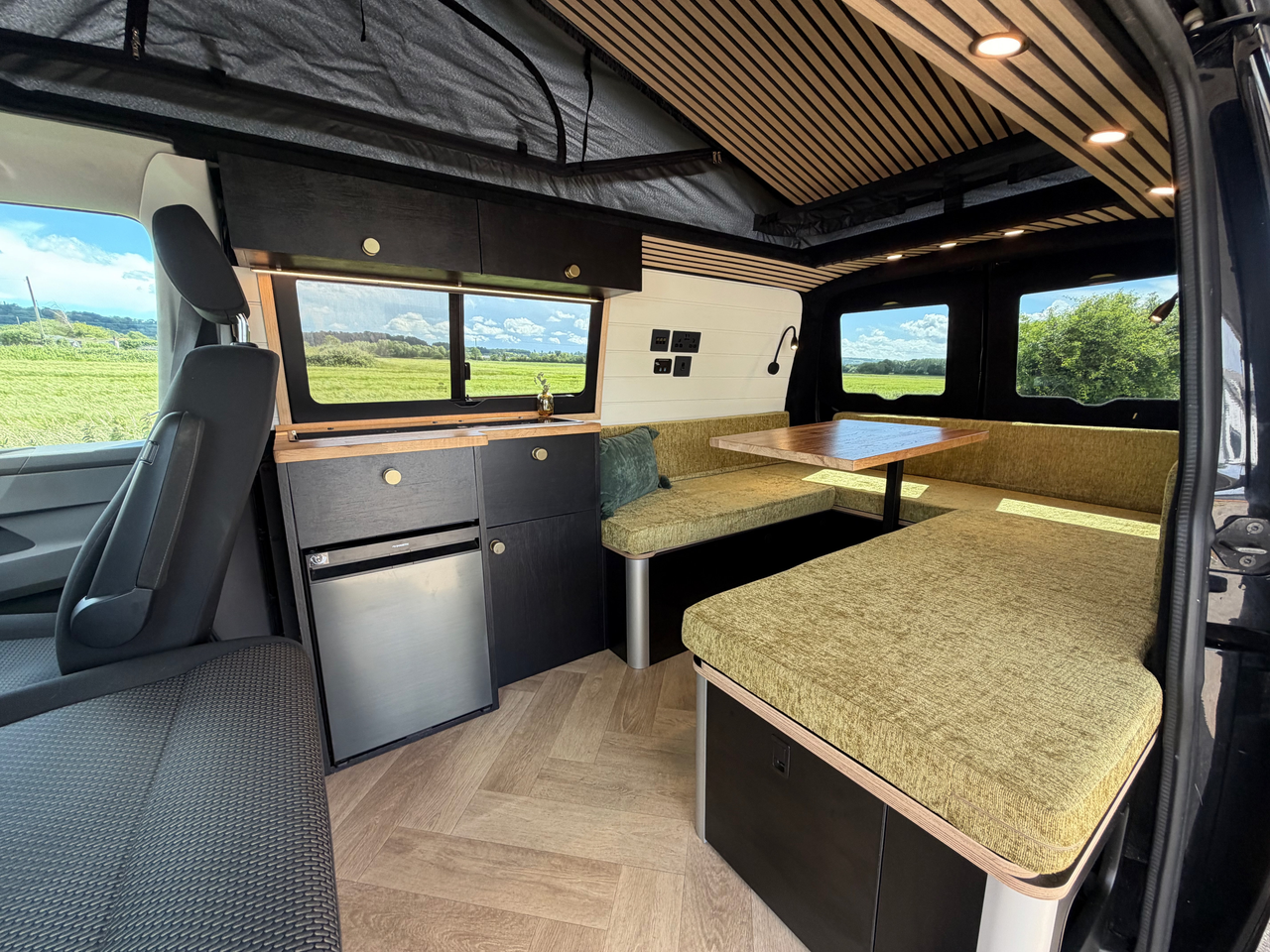
A campervan adds the things you need to stay overnight: a bed, cooking facilities and proper storage. These are also among the internal features DVLA considers when deciding whether a vehicle can be recorded as a “motor caravan” on the V5C. They include seats and a table, sleeping accommodation that may convert from the seats but must be secured as a permanent part of the van, cooking facilities fitted in place, and storage. DVLA also considers external features such as windows in the living area, a separate door into the living space and a high-top roof.
The V5C body type describes how a vehicle looks in traffic. A converted van can still be used as a motor caravan even if its body type has not been changed, provided it has the required internal features. The V5C entry does not itself change the vehicle’s insurance category, speed limits or other legal requirements, although you should always describe the conversion and how you use the vehicle accurately to your insurer. Our guide to the DVLA reclassification rules explains the detail. When comparing listings, check the actual sleeping, cooking and storage setup rather than relying on the word “campervan” in the title.
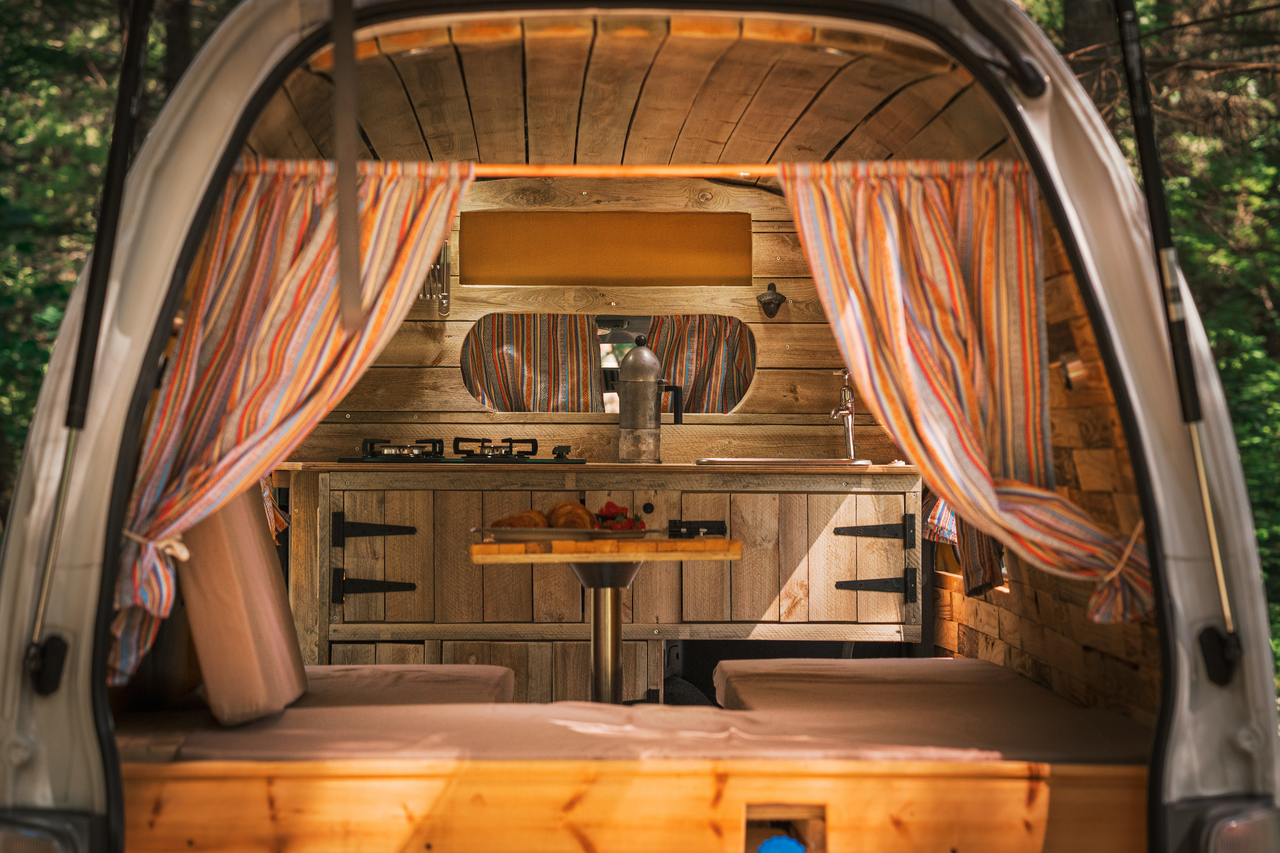
Which one actually suits you?
Be honest about how you will use it. If you will sleep in the van more than a couple of nights a year, you want a campervan, and a day van will leave you wishing you had bought one. If you mainly want a comfortable, flexible vehicle for days out and the odd festival, a day van is cheaper, easier to drive and park, and does the job without space you never use.
The classic mistake is buying more van than you need: a full conversion that spends its life doing day-van duties, costing more to buy, run and park. Match the vehicle to the trips you will really take. If you are weighing up types more broadly, our guide to campervan vs motorhome covers the next decision up.
How to tell which you are looking at
Ignore the headline on the advert and read the specification. Is there a fixed or proper convertible bed, or just seats? Is there a cooker fitted in place, or nothing? Is there real storage for more than a coat and a flask? Is it registered as a motor caravan on the V5C, or still listed as a van or a special purpose vehicle? Those answers, not the word in the title, tell you whether you are looking at a day van or a campervan, and whether it will do what you need it to.
Cost and everyday use
A day van usually costs less to buy than a full conversion of the same size, because there is less built into it, and that simpler fit-out also means less to go wrong and maintain. It is easier to use as an everyday vehicle too, since you are not living around a fixed bed and kitchen on the school run. A Euro 6 diesel example will usually meet clean air zone rules, like any modern van. The trade-off comes at resale: the pool of buyers for a day van is smaller than for a proper campervan, so it is worth thinking about who you would sell it to later, not only what suits you now.
Where to look
Still not sure which would suit you? Before you buy, hire a campervan for a short trip. A weekend away will quickly show you whether you value a proper bed, kitchen and extra storage, or whether something simpler would suit you just as well.
A campervan can still make sense even if most of your own adventures are days out. When you are not using it, you could rent out your campervan through Quirky Campers, choosing the dates that work for you. It gives other people the chance to enjoy weekends away and could help towards the ongoing cost of ownership.
Once you know what you need, you can browse campervans for sale and compare the different sizes, layouts and features. You will be choosing from experience rather than guesswork.
Frequently asked questions
What is the difference between a day van and a campervan?
A day van is designed mainly for days out, so it may have comfortable seating, storage and perhaps a small fridge or hob without a permanent sleeping setup. A campervan is equipped for overnight trips, with secured sleeping accommodation, cooking facilities and storage. Micro campers often sit somewhere between the two.
Can you sleep overnight in a day van?
Some day vans have a folding or removable bed and can manage an occasional night away. They won’t usually provide the comfort, storage or cooking facilities of a full campervan, though. If weekends away are part of the plan, check exactly how the bed works and what ventilation, power and cooking facilities are included.
Is a micro camper a day van or a campervan?
It depends on the conversion. Some micro campers are essentially day vans with removable camping equipment, while others have secured sleeping, cooking and storage facilities. Read the specification and check the V5C rather than relying on the wording used in the advert.
Does a campervan have to be registered as a motor caravan on the V5C?
No. A converted vehicle can still be used as a motor caravan even if its V5C body type hasn’t been changed. The entry describes how the vehicle looks in traffic and does not, by itself, change its insurance category, speed limits or other legal requirements. You should still describe the conversion and how you intend to use it accurately when arranging insurance. You can read the full DVLA motor caravan guidance online.
Should I hire a campervan before buying one?
If you aren’t sure what you need, hiring a campervan for a couple of nights is a sensible test. You’ll soon discover how much you value standing room, a fitted kitchen, easy bed setup and extra storage. Afterwards, you can browse campervans for sale with a much clearer idea of what will suit you.
Can I hire out a campervan if I mainly use it for day trips?
Yes, provided it is a properly equipped campervan and meets the requirements for paying guests. You can apply to rent out your campervan through Quirky Campers and choose when it is available, keeping your own holidays and weekends blocked out. It means the van can give other people a weekend away rather than sitting unused between your own trips.